Tag: home improvement

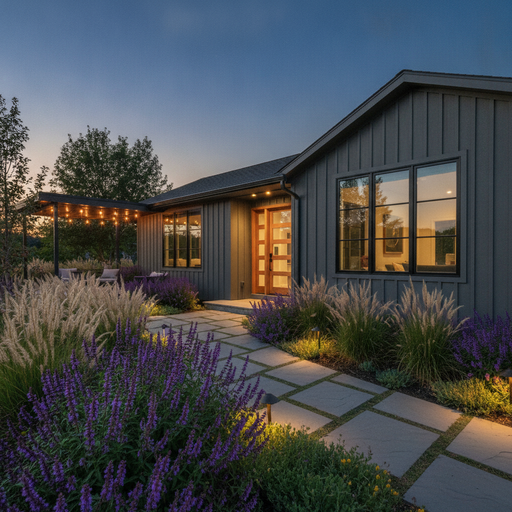
  • 10 Transformative Ranch Home Curb Appeal Upgrades to Modernize Your Exterior

    10 Transformative Ranch Home Curb Appeal Upgrades to Modernize Your Exterior

    The Story of the Classic American Ranch

    Imagine driving through a quiet, leaf-canopied neighborhood. You see rows of houses, but one particular style stands out for its low profile and long, horizontal lines: the classic American Ranch. Born in the 1930s and exploding in popularity during the post-war era of the 1950s, the ranch-style home was designed for simplicity, accessibility, and a seamless coection to the outdoors. However, what was once “cutting-edge” can sometimes feel a bit “cookie-cutter” or dated in the modern world.

    I remember visiting a friend’s house, a sturdy brick ranch built in 1962. From the curb, it looked a bit flat, almost hiding behind its overgrown boxwood hedges. It had “good bones,” as architects say, but it lacked a certain “wow” factor. It’s a common story for many homeowners. You love the single-story living and the open floor plan, but the exterior feels like a relic of the past. The good news? Ranch homes are the perfect “blank canvas” for curb appeal upgrades. Because of their simple geometry, even small changes can create a dramatic visual impact.

    In this guide, we are going to walk through ten transformative upgrades that will turn your ranch home from a dated dwelling into the neighborhood showstopper.

    1. Define the Entryway with a Bold Front Door

    The front door is essentially the “handshake” of your home. In a long, horizontal ranch house, the entrance can sometimes get lost in the sea of siding or brick. To fix this, you need to create a focal point. Modernizing your front door is perhaps the most cost-effective way to boost curb appeal instantly.

    Consider replacing a traditional solid wood door with something that features glass panels to let iatural light. If a full replacement isn’t in the budget, never underestimate the power of paint. For ranch homes, bold colors like deep navy, sage green, or even a vibrant mustard yellow can provide a stuing contrast against neutral siding. Pair this with modern hardware—think matte black or brushed gold—to give it a contemporary edge.

    2. Break the Horizontal Line with Layered Landscaping

    One of the biggest challenges with ranch homes is their “flatness.” Since everything is on one level, the eye tends to slide right across the house without stopping. To combat this, you need to introduce verticality through landscaping.

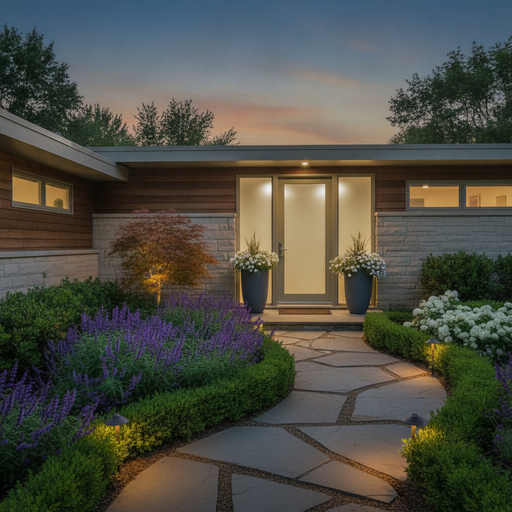
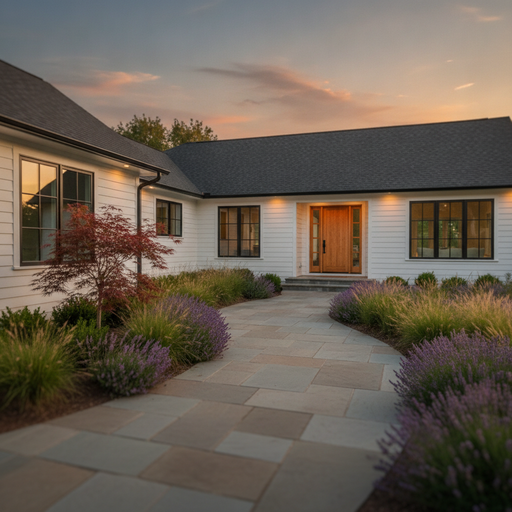
    Instead of a single row of low shrubs, think in layers. Start with taller ornamental trees like a Japanese Maple or a Dogwood near the corners of the house to soften the sharp angles. In front of those, place medium-sized pereials, and finish with low-growing groundcovers or flowers at the very front of the bed. By creating different heights, you force the eye to move up and down, giving the property a sense of depth and richness it previously lacked.

    3. Modernize the Siding and Texture

    Many older ranch homes are covered in dated vinyl siding or monochromatic brick. While there’s nothing wrong with brick, a sea of a single color can look monotonous. One of the trendiest upgrades for ranch homes today is “mixed media” exteriors.

    Consider adding stone veneer to the lower third of your home or around the entryway. If you have siding, swapping standard horizontal planks for vertical “board and batten” can make the house appear taller and more modern. Even painting your brick—a move that was once controversial but is now highly popular—in a crisp white or a sophisticated charcoal gray can completely reinvent the home’s silhouette.

    4. Upgrade to Architectural Windows

    Windows are often referred to as the “eyes” of the home. Old, double-hung windows with thick white plastic grids can make a ranch look aged. To modernize, consider windows with thin, dark frames (like black or dark bronze). Large picture windows are a hallmark of mid-century ranch design, so if you have them, make them a feature. Removing old-fashioned shutters can also clean up the lines of the house, giving it a sleeker, more “Mid-Century Modern” vibe that is very much in style right now.

    5. Lighting: From Functional to Atmospheric

    Most ranch homes come with a single, lonely light fixture next to the front door. To truly upgrade your curb appeal, you need a comprehensive lighting plan that works long after the sun goes down. Replace that dated porch light with a modern lantern or a sleek LED sconce.

    Beyond the porch, add path lights along the walkway to guide guests to your door. For a truly high-end look, install “uplighting” at the base of your trees or against certain sections of the house. This creates shadows and highlights that make the architecture look more expensive and secure at night.

    6. Transform the Walkway

    The path to your front door should be an invitation. Many ranch homes have a narrow, cracked concrete sidewalk that runs parallel to the house. This reinforces that “flat” look we want to avoid. If you have the opportunity, redesign the walkway to have a gentle curve. Using materials like flagstone, pavers, or even stamped concrete can add texture and color. A wider path (at least 4 feet) feels more luxurious and allows two people to walk side-by-side, making the entrance feel much more welcoming.

    7. Add a Porch or Portico

    Because ranch homes often have very little “overhang” at the front door, the entrance can feel exposed. Adding a small front porch or a portico (a roofed structure over the door) can completely change the house’s profile. This adds a “protrusion” that breaks up the long roofline. Not only does this provide shelter from the rain, but it also gives you a place to add architectural details like wooden beams or stone pillars, which add a sense of craftsmanship and “weight” to the design.

    8. Creative Use of House Numbers and Mailboxes

    When it comes to curb appeal, the devil is in the details. Often, homeowners overlook the small things like house numbers and the mailbox. For a ranch home, look for oversized, modern house numbers. Floating metal numbers in a sans-serif font look incredible against wood or brick. Similarly, if your mailbox is at the end of the driveway, replace the standard plastic box with a modern wooden or metal design that matches your home’s new aesthetic. These small investments offer a high return on visual appeal.

    9. Soften the Hardscapes with Flower Boxes

    If your ranch home has a lot of concrete or brick, you might need to “soften” the look with more greenery. Window boxes are a classic solution. They bring the garden up to the house and add a splash of color at eye level. For a ranch home, choose long, rectangular boxes that mimic the house’s horizontal lines. Fill them with a mix of “thrillers” (tall plants), “fillers” (bushy plants), and “spillers” (vines that hang over the edge) for a professional look.

    10. The Power of a Clean Roofline and Gutters

    Finally, we have to talk about the roof. Because ranch homes are low, the roof accounts for a large percentage of what people see from the street. If your shingles are curling or covered in moss, no amount of flowers will save your curb appeal. Keep your gutters clean and consider upgrading to seamless aluminum gutters in a dark color that matches your trim. If it’s time for a new roof, architectural shingles add texture and “shadow lines” that make the roof look more substantial and attractive.

    Bringing It All Together

    Upgrading a ranch home is a journey of balance. You want to honor the simplicity of the original design while introducing modern textures, colors, and vertical elements. By focusing on the entryway, layering your landscape, and paying attention to the small details like lighting and hardware, you can transform a “simple” house into a stuing home.

    Remember, curb appeal isn’t just for your neighbors or for a potential buyer—it’s for you. There is a special kind of joy that comes from turning the corner into your street and seeing a home that looks fresh, cared for, and full of personality. Your ranch home has waited decades for this makeover; it’s time to give it the spotlight it deserves.
  • 10 Transformative Ranch Home Curb Appeal Upgrades to Modernize Your Exterior

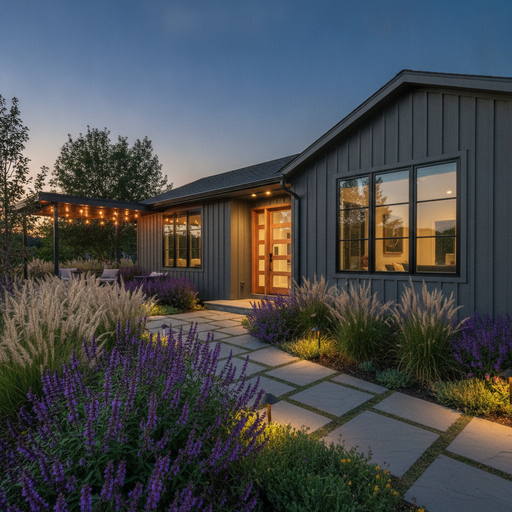
    10 Transformative Ranch Home Curb Appeal Upgrades to Modernize Your Exterior

    The Story of the Classic American Ranch

    Imagine driving through a quiet, leaf-canopied neighborhood. You see rows of houses, but one particular style stands out for its low profile and long, horizontal lines: the classic American Ranch. Born in the 1930s and exploding in popularity during the post-war era of the 1950s, the ranch-style home was designed for simplicity, accessibility, and a seamless coection to the outdoors. However, what was once “cutting-edge” can sometimes feel a bit “cookie-cutter” or dated in the modern world.

    I remember visiting a friend’s house, a sturdy brick ranch built in 1962. From the curb, it looked a bit flat, almost hiding behind its overgrown boxwood hedges. It had “good bones,” as architects say, but it lacked a certain “wow” factor. It’s a common story for many homeowners. You love the single-story living and the open floor plan, but the exterior feels like a relic of the past. The good news? Ranch homes are the perfect “blank canvas” for curb appeal upgrades. Because of their simple geometry, even small changes can create a dramatic visual impact.

    In this guide, we are going to walk through ten transformative upgrades that will turn your ranch home from a dated dwelling into the neighborhood showstopper.

    1. Define the Entryway with a Bold Front Door

    The front door is essentially the “handshake” of your home. In a long, horizontal ranch house, the entrance can sometimes get lost in the sea of siding or brick. To fix this, you need to create a focal point. Modernizing your front door is perhaps the most cost-effective way to boost curb appeal instantly.

    Consider replacing a traditional solid wood door with something that features glass panels to let iatural light. If a full replacement isn’t in the budget, never underestimate the power of paint. For ranch homes, bold colors like deep navy, sage green, or even a vibrant mustard yellow can provide a stuing contrast against neutral siding. Pair this with modern hardware—think matte black or brushed gold—to give it a contemporary edge.

    2. Break the Horizontal Line with Layered Landscaping

    One of the biggest challenges with ranch homes is their “flatness.” Since everything is on one level, the eye tends to slide right across the house without stopping. To combat this, you need to introduce verticality through landscaping.

    Instead of a single row of low shrubs, think in layers. Start with taller ornamental trees like a Japanese Maple or a Dogwood near the corners of the house to soften the sharp angles. In front of those, place medium-sized pereials, and finish with low-growing groundcovers or flowers at the very front of the bed. By creating different heights, you force the eye to move up and down, giving the property a sense of depth and richness it previously lacked.

    3. Modernize the Siding and Texture

    Many older ranch homes are covered in dated vinyl siding or monochromatic brick. While there’s nothing wrong with brick, a sea of a single color can look monotonous. One of the trendiest upgrades for ranch homes today is “mixed media” exteriors.

    Consider adding stone veneer to the lower third of your home or around the entryway. If you have siding, swapping standard horizontal planks for vertical “board and batten” can make the house appear taller and more modern. Even painting your brick—a move that was once controversial but is now highly popular—in a crisp white or a sophisticated charcoal gray can completely reinvent the home’s silhouette.

    4. Upgrade to Architectural Windows

    Windows are often referred to as the “eyes” of the home. Old, double-hung windows with thick white plastic grids can make a ranch look aged. To modernize, consider windows with thin, dark frames (like black or dark bronze). Large picture windows are a hallmark of mid-century ranch design, so if you have them, make them a feature. Removing old-fashioned shutters can also clean up the lines of the house, giving it a sleeker, more “Mid-Century Modern” vibe that is very much in style right now.

    5. Lighting: From Functional to Atmospheric

    Most ranch homes come with a single, lonely light fixture next to the front door. To truly upgrade your curb appeal, you need a comprehensive lighting plan that works long after the sun goes down. Replace that dated porch light with a modern lantern or a sleek LED sconce.

    Beyond the porch, add path lights along the walkway to guide guests to your door. For a truly high-end look, install “uplighting” at the base of your trees or against certain sections of the house. This creates shadows and highlights that make the architecture look more expensive and secure at night.

    6. Transform the Walkway

    The path to your front door should be an invitation. Many ranch homes have a narrow, cracked concrete sidewalk that runs parallel to the house. This reinforces that “flat” look we want to avoid. If you have the opportunity, redesign the walkway to have a gentle curve. Using materials like flagstone, pavers, or even stamped concrete can add texture and color. A wider path (at least 4 feet) feels more luxurious and allows two people to walk side-by-side, making the entrance feel much more welcoming.

    7. Add a Porch or Portico

    Because ranch homes often have very little “overhang” at the front door, the entrance can feel exposed. Adding a small front porch or a portico (a roofed structure over the door) can completely change the house’s profile. This adds a “protrusion” that breaks up the long roofline. Not only does this provide shelter from the rain, but it also gives you a place to add architectural details like wooden beams or stone pillars, which add a sense of craftsmanship and “weight” to the design.

    8. Creative Use of House Numbers and Mailboxes

    When it comes to curb appeal, the devil is in the details. Often, homeowners overlook the small things like house numbers and the mailbox. For a ranch home, look for oversized, modern house numbers. Floating metal numbers in a sans-serif font look incredible against wood or brick. Similarly, if your mailbox is at the end of the driveway, replace the standard plastic box with a modern wooden or metal design that matches your home’s new aesthetic. These small investments offer a high return on visual appeal.

    9. Soften the Hardscapes with Flower Boxes

    If your ranch home has a lot of concrete or brick, you might need to “soften” the look with more greenery. Window boxes are a classic solution. They bring the garden up to the house and add a splash of color at eye level. For a ranch home, choose long, rectangular boxes that mimic the house’s horizontal lines. Fill them with a mix of “thrillers” (tall plants), “fillers” (bushy plants), and “spillers” (vines that hang over the edge) for a professional look.

    10. The Power of a Clean Roofline and Gutters

    Finally, we have to talk about the roof. Because ranch homes are low, the roof accounts for a large percentage of what people see from the street. If your shingles are curling or covered in moss, no amount of flowers will save your curb appeal. Keep your gutters clean and consider upgrading to seamless aluminum gutters in a dark color that matches your trim. If it’s time for a new roof, architectural shingles add texture and “shadow lines” that make the roof look more substantial and attractive.

    Bringing It All Together

    Upgrading a ranch home is a journey of balance. You want to honor the simplicity of the original design while introducing modern textures, colors, and vertical elements. By focusing on the entryway, layering your landscape, and paying attention to the small details like lighting and hardware, you can transform a “simple” house into a stuing home.

    Remember, curb appeal isn’t just for your neighbors or for a potential buyer—it’s for you. There is a special kind of joy that comes from turning the corner into your street and seeing a home that looks fresh, cared for, and full of personality. Your ranch home has waited decades for this makeover; it’s time to give it the spotlight it deserves.
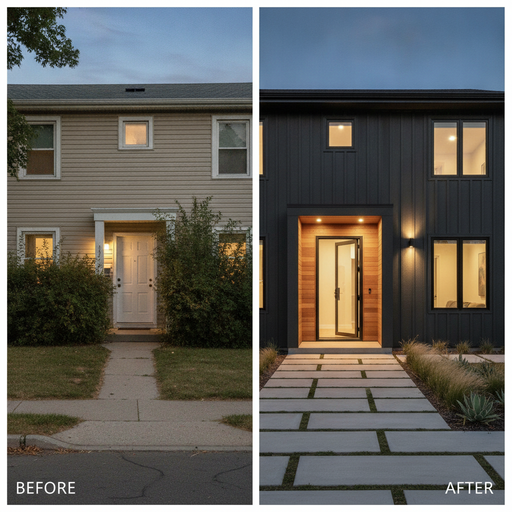
  • From Dated to Dreamy: 10 Modern Exterior House Renovation Ideas to Boost Your Curb Appeal

    From Dated to Dreamy: 10 Modern Exterior House Renovation Ideas to Boost Your Curb Appeal

    The First Impression: Why Your Home’s Exterior Matters

    Imagine pulling into your driveway after a long day at work. You look up, and instead of seeing a tired, weathered facade that feels like a relic of the past, you are greeted by a sleek, sophisticated sanctuary that reflects exactly who you are today. That is the power of a modern exterior renovation. We often spend so much time obsessing over kitchen backsplashes and living room layouts that we forget the exterior is the “handshake” of our home—it’s the first thing guests see and the primary factor in your property’s value.

    Modern design isn’t just about cold minimalism or looking like a tech office. It’s about intentionality, clean lines, and a harmonious relationship between the structure and its surroundings. Whether you live in a mid-century ranch, a traditional suburban two-story, or a charming bungalow, there are ways to infuse modern aesthetics into your home’s “skin” that feel timeless rather than trendy. In this guide, we’ll explore the most impactful renovation ideas to help you transition your home from dated to dreamy.

    1. Embrace the Power of High-Contrast Color Palettes

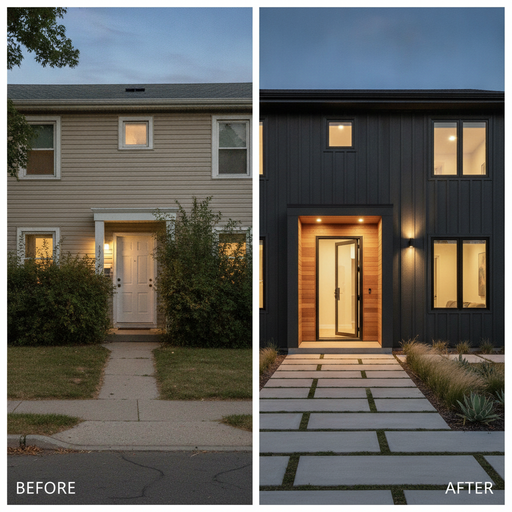
    One of the fastest ways to modernize an exterior is through color. Gone are the days when every house on the block had to be a safe shade of beige or eggshell. Today, modern homes are embracing high contrast. Think deep charcoals, moody blacks, or “iron ore” grays paired with crisp white trim or warm wood accents.

    A dark exterior can make a house appear more grounded and expensive. If you aren’t ready to commit to a fully dark house, consider the “tuxedo look”—white siding with black window frames and black gutters. This classic yet modern combination creates sharp lines that define the architectural shape of your home, making even an older structure look instantly updated.

    2. Mix Your Materials for Visual Depth

    A common mistake in older home design was using a single material for the entire exterior. Modern architecture thrives on texture. By mixing materials, you create visual interest and break up large, flat surfaces. Consider a combination of:

    • Horizontal Siding: Use classic fiber cement boards for durability.
    • Natural Wood Accents: Cedar or redwood panels around the entryway add warmth and an organic feel.
    • Stone Veneer: Incorporating stacked stone or large-format concrete tiles near the foundation or on a chimney adds a sense of permanence.
    • Metal Paneling: Corrugated or flat metal panels can add an industrial-modern edge to specific sections of the house.

    The key is balance. You don’t want the house to look busy; you want it to look curated. Choose one dominant material and use two others as accents to highlight architectural features like an entryway or a second-story bump-out.

    3. The “Black Window” Revolution

    If you have the budget for a single major change, let it be your windows. For decades, white vinyl windows were the standard, but they often look cheap and dated. Modern design has pivoted toward black or dark bronze frames. These dark frames act like a picture frame for the view outside, drawing the eye and providing a sophisticated, high-end look.

    To go truly modern, consider larger panes of glass with thier frames. If your home has traditional “grids” or “muntins” (those little bars that divide the glass), consider removing them or opting for a simple horizontal grid. This opens up the facade and allows more natural light to flood your interior, bridging the gap between inside and out.

    4. Redefine the Entryway

    Your front door is the focal point of the entire exterior. A modern renovation often involves replacing a standard, ornate wooden door with something more architectural. Look for doors with clean geometric lines, frosted glass inserts, or even oversized “pivot” doors if your structure allows for it.

    Don’t stop at the door. Consider the hardware—swap out brass handlesets for matte black or brushed gold linear pulls. Even your house numbers should get an upgrade. Modern, sans-serif typography in a vertical or horizontal layout can make a significant difference in the overall “vibe” of your porch.

    5. Modernize Your Landscaping (Xeriscaping and Geometry)

    You can renovate the house itself, but if the bushes are overgrown and the lawn is a messy patch of weeds, the modern look won’t stick. Modern landscaping is all about structure and intentionality. Instead of messy flower beds, think about:

    • Geometric Concrete Pavers: Use large rectangular stones with gravel or “steppable” ground cover in between.
    • Native Plants: Choose plants that are native to your region. They look more natural and require less water (a practice known as xeriscaping).
    • Mass Planting: Instead of one of everything, plant a dozen of the same ornamental grass in a neat row. This creates a clean, architectural look.
    • Defined Edges: Use steel or concrete edging to create sharp lines between your lawn, mulch, and walkways.

    6. Strategic Outdoor Lighting

    A modern home should look just as good at night as it does during the day. Modern lighting is about “layering.” You want more than just a single porch light. Use LED strip lighting under the eaves or along the stairs to create a soft glow. Use “up-lighting” to highlight a beautiful tree or a textured stone wall. Modern sconces—typically simple cylinders or cubes that cast light both up and down—can flank the front door to create a dramatic, welcoming entrance.

    7. Clean Up the Roofline

    The roof is often the most overlooked part of an exterior renovation. While you might not be able to change the pitch of your roof without a massive structural overhaul, you can modernize the materials. A standing-seam metal roof is the gold standard for modern homes. It’s durable, sleek, and comes in beautiful dark finishes that complement a modern color palette.

    If a metal roof isn’t in the cards, choose architectural shingles in a solid, dark color like charcoal or black. Avoid “multi-tonal” shingles that can look busy and dated. Additionally, ensure your gutters and downspouts are integrated into the design. Square-profile gutters in a color that matches your trim will disappear into the house rather than standing out as an eyesore.

    8. Garage Door Upgrades

    In many suburban homes, the garage door takes up 30% or more of the front facade. If your garage door is a standard white raised-panel design, it’s dragging your home’s aesthetic down. A modern garage door—perhaps one with frosted glass panels or a sleek wood-slat design—can completely transform the house. It turns a functional necessity into a design statement.

    9. Creating Outdoor Living Transitions

    Modern design emphasizes the “indoor-outdoor flow.” If your renovation allows, consider adding a modern deck or a front patio area. Use horizontal cable railings or glass panels instead of traditional wooden balusters. This keeps the sightlines open and maintains that minimalist aesthetic. Even a simple concrete pad with some modern Adirondack chairs and a fire pit can signal that your home is designed for a modern lifestyle.

    10. Focus on the Details: Mailboxes and Hardware

    Finally, don’t forget the small things. A modern renovation is often a sum of its parts. Replace that old plastic mailbox with a sleek metal one. Update your doorbell to a smart, minimalist version. Ensure your outdoor outlets have modern, low-profile covers. These details might seem small, but when they all align with a singular modern vision, the result is a home that feels cohesive, expensive, and deeply personal.

    Conclusion: The Journey to a Modern Home

    Renovating the exterior of your home is a journey of transformation. It’s about stripping away the uecessary and highlighting the beauty of form and function. By focusing on clean lines, a sophisticated color palette, and a mix of high-quality materials, you can take a house that feels stuck in the past and bring it firmly into the present. Remember, a modern exterior isn’t just about following trends—it’s about creating a timeless space that you are proud to call home every time you turn the corner into your driveway.

  • From Dated to Dreamy: 10 Modern Exterior House Renovation Ideas to Boost Your Curb Appeal

    From Dated to Dreamy: 10 Modern Exterior House Renovation Ideas to Boost Your Curb Appeal

    The First Impression: Why Your Home’s Exterior Matters

    Imagine pulling into your driveway after a long day at work. You look up, and instead of seeing a tired, weathered facade that feels like a relic of the past, you are greeted by a sleek, sophisticated sanctuary that reflects exactly who you are today. That is the power of a modern exterior renovation. We often spend so much time obsessing over kitchen backsplashes and living room layouts that we forget the exterior is the “handshake” of our home—it’s the first thing guests see and the primary factor in your property’s value.

    Modern design isn’t just about cold minimalism or looking like a tech office. It’s about intentionality, clean lines, and a harmonious relationship between the structure and its surroundings. Whether you live in a mid-century ranch, a traditional suburban two-story, or a charming bungalow, there are ways to infuse modern aesthetics into your home’s “skin” that feel timeless rather than trendy. In this guide, we’ll explore the most impactful renovation ideas to help you transition your home from dated to dreamy.

    1. Embrace the Power of High-Contrast Color Palettes

    One of the fastest ways to modernize an exterior is through color. Gone are the days when every house on the block had to be a safe shade of beige or eggshell. Today, modern homes are embracing high contrast. Think deep charcoals, moody blacks, or “iron ore” grays paired with crisp white trim or warm wood accents.

    A dark exterior can make a house appear more grounded and expensive. If you aren’t ready to commit to a fully dark house, consider the “tuxedo look”—white siding with black window frames and black gutters. This classic yet modern combination creates sharp lines that define the architectural shape of your home, making even an older structure look instantly updated.

    2. Mix Your Materials for Visual Depth

    A common mistake in older home design was using a single material for the entire exterior. Modern architecture thrives on texture. By mixing materials, you create visual interest and break up large, flat surfaces. Consider a combination of:

    • Horizontal Siding: Use classic fiber cement boards for durability.
    • Natural Wood Accents: Cedar or redwood panels around the entryway add warmth and an organic feel.
    • Stone Veneer: Incorporating stacked stone or large-format concrete tiles near the foundation or on a chimney adds a sense of permanence.
    • Metal Paneling: Corrugated or flat metal panels can add an industrial-modern edge to specific sections of the house.

    The key is balance. You don’t want the house to look busy; you want it to look curated. Choose one dominant material and use two others as accents to highlight architectural features like an entryway or a second-story bump-out.

    3. The “Black Window” Revolution

    If you have the budget for a single major change, let it be your windows. For decades, white vinyl windows were the standard, but they often look cheap and dated. Modern design has pivoted toward black or dark bronze frames. These dark frames act like a picture frame for the view outside, drawing the eye and providing a sophisticated, high-end look.

    To go truly modern, consider larger panes of glass with thier frames. If your home has traditional “grids” or “muntins” (those little bars that divide the glass), consider removing them or opting for a simple horizontal grid. This opens up the facade and allows more natural light to flood your interior, bridging the gap between inside and out.

    4. Redefine the Entryway

    Your front door is the focal point of the entire exterior. A modern renovation often involves replacing a standard, ornate wooden door with something more architectural. Look for doors with clean geometric lines, frosted glass inserts, or even oversized “pivot” doors if your structure allows for it.

    Don’t stop at the door. Consider the hardware—swap out brass handlesets for matte black or brushed gold linear pulls. Even your house numbers should get an upgrade. Modern, sans-serif typography in a vertical or horizontal layout can make a significant difference in the overall “vibe” of your porch.

    5. Modernize Your Landscaping (Xeriscaping and Geometry)

    You can renovate the house itself, but if the bushes are overgrown and the lawn is a messy patch of weeds, the modern look won’t stick. Modern landscaping is all about structure and intentionality. Instead of messy flower beds, think about:

    • Geometric Concrete Pavers: Use large rectangular stones with gravel or “steppable” ground cover in between.
    • Native Plants: Choose plants that are native to your region. They look more natural and require less water (a practice known as xeriscaping).
    • Mass Planting: Instead of one of everything, plant a dozen of the same ornamental grass in a neat row. This creates a clean, architectural look.
    • Defined Edges: Use steel or concrete edging to create sharp lines between your lawn, mulch, and walkways.

    6. Strategic Outdoor Lighting

    A modern home should look just as good at night as it does during the day. Modern lighting is about “layering.” You want more than just a single porch light. Use LED strip lighting under the eaves or along the stairs to create a soft glow. Use “up-lighting” to highlight a beautiful tree or a textured stone wall. Modern sconces—typically simple cylinders or cubes that cast light both up and down—can flank the front door to create a dramatic, welcoming entrance.

    7. Clean Up the Roofline

    The roof is often the most overlooked part of an exterior renovation. While you might not be able to change the pitch of your roof without a massive structural overhaul, you can modernize the materials. A standing-seam metal roof is the gold standard for modern homes. It’s durable, sleek, and comes in beautiful dark finishes that complement a modern color palette.

    If a metal roof isn’t in the cards, choose architectural shingles in a solid, dark color like charcoal or black. Avoid “multi-tonal” shingles that can look busy and dated. Additionally, ensure your gutters and downspouts are integrated into the design. Square-profile gutters in a color that matches your trim will disappear into the house rather than standing out as an eyesore.

    8. Garage Door Upgrades

    In many suburban homes, the garage door takes up 30% or more of the front facade. If your garage door is a standard white raised-panel design, it’s dragging your home’s aesthetic down. A modern garage door—perhaps one with frosted glass panels or a sleek wood-slat design—can completely transform the house. It turns a functional necessity into a design statement.

    9. Creating Outdoor Living Transitions

    Modern design emphasizes the “indoor-outdoor flow.” If your renovation allows, consider adding a modern deck or a front patio area. Use horizontal cable railings or glass panels instead of traditional wooden balusters. This keeps the sightlines open and maintains that minimalist aesthetic. Even a simple concrete pad with some modern Adirondack chairs and a fire pit can signal that your home is designed for a modern lifestyle.

    10. Focus on the Details: Mailboxes and Hardware

    Finally, don’t forget the small things. A modern renovation is often a sum of its parts. Replace that old plastic mailbox with a sleek metal one. Update your doorbell to a smart, minimalist version. Ensure your outdoor outlets have modern, low-profile covers. These details might seem small, but when they all align with a singular modern vision, the result is a home that feels cohesive, expensive, and deeply personal.

    Conclusion: The Journey to a Modern Home

    Renovating the exterior of your home is a journey of transformation. It’s about stripping away the uecessary and highlighting the beauty of form and function. By focusing on clean lines, a sophisticated color palette, and a mix of high-quality materials, you can take a house that feels stuck in the past and bring it firmly into the present. Remember, a modern exterior isn’t just about following trends—it’s about creating a timeless space that you are proud to call home every time you turn the corner into your driveway.

  • From Flat to Fabulous: 10 Inspiring Ranch Home Entryway Landscaping Ideas to Elevate Your Curb Appeal

    From Flat to Fabulous: 10 Inspiring Ranch Home Entryway Landscaping Ideas to Elevate Your Curb Appeal

    The Story of the Hidden Front Door

    Imagine walking down a quiet suburban street at dusk. Most houses look the same—long, low silhouettes that blend into the darkening sky. But then, you see it. A classic mid-century ranch home that doesn’t just sit on its lot; it glows. The walkway isn’t just a path; it is an invitation. The plants aren’t just bushes; they are a curated symphony of textures and colors that lead your eyes straight to a bold, welcoming front door. This is the power of intentional entryway landscaping.

    Ranch homes, while beloved for their single-story convenience and open floor plans, often suffer from a “flat” appearance. Because of their horizontal orientation, the entryway can sometimes feel lost or overshadowed by the vast expanse of the roofline. As a homeowner, your mission is to break that horizontal plane and create a focal point that says, “Welcome home.” Whether you are looking to sell or simply want to fall in love with your house all over again, these landscaping strategies will transform your ranch entryway into a neighborhood masterpiece.

    1. Define the Journey with a Grand Walkway

    In many older ranch homes, the original walkway is a narrow strip of cracked concrete ruing parallel to the house. To create a modern, inviting feel, you need to rethink the “journey” to your door. A curved path made of natural flagstone, oversized pavers, or even stamped concrete creates visual movement. By adding a slight curve, you force the eye to move across the landscape rather than just staring at the flat facade of the house.

    Consider widening the path as it nears the porch. This creates a “landing zone” that feels spacious and premium. Use materials that complement your home’s siding or brickwork. If your ranch is mid-century modern, clean-lined concrete slabs with gravel in between offer a minimalist, high-end look. If your style is more “cottage ranch,” weathered brick or irregular stones nestled in moss will provide that cozy, lived-in charm.

    2. The “Three-Tier” Planting Strategy

    One of the most common mistakes in ranch landscaping is planting a single row of identical shrubs along the foundation. This only reinforces the long, flat line of the house. Instead, use a three-tier approach to create depth and dimension:

    • The Back Layer (Height): Use tall evergreens or ornamental trees like Japanese Maples or Sky Pencil Hollies at the corners of the house or flanking the door. These provide verticality and break the roofline.
    • The Middle Layer (Texture): Choose mid-sized shrubs like hydrangeas, boxwoods, or azaleas. These provide the “body” of your garden bed and can offer seasonal color.
    • The Front Layer (Detail): Finish with low-growing pereials, groundcovers, or auals. Think creeping phlox, hostas, or seasonal marigolds to add pops of color right at the edge of the walkway.

    3. Create a Focal Point with Ornamental Trees

    Every great story needs a protagonist, and your entryway landscape needs a star. An ornamental tree placed strategically near the entrance acts as an anchor. For a ranch home, you want a tree that doesn’t grow tall enough to swallow the house but has enough character to stand out. A Dogwood, a Redbud, or a Star Magnolia offers stuing spring blooms and interesting bark textures in the winter. Placing this tree slightly offset from the door creates a sophisticated, asymmetrical balance that is hallmark to ranch-style architecture.

    4. Incorporate Large-Scale Containers

    Sometimes, the area immediately surrounding a ranch entryway is mostly hardscape—concrete porches or brick steps. This is where “pot-scaping” comes into play. Large, heavy-duty planters in bold colors (like navy blue, charcoal, or classic terracotta) can frame your doorway. The beauty of containers is that they bring the garden up to eye level. You can use the “Thriller, Filler, Spiller” method: a tall spike or grass as the “thriller,” flowering petunias as the “filler,” and ivy or sweet potato vine as the “spiller” to soften the edges of the pot.

    5. The Magic of Evening Illumination

    Your landscaping shouldn’t disappear when the sun goes down. In fact, a ranch home can look its most dramatic at night with the right lighting. Avoid the “runway” look of equally spaced lights along the path. Instead, use a layered lighting design:

    • Uplighting: Place spotlights at the base of your ornamental trees to highlight their structure.
    • Path Lights: Use low-voltage LED lights tucked into the foliage to cast a soft glow on the walkway.
    • Moonlighting: If you have a large tree in the front yard, place a light high up in the branches aiming downward to mimic the soft glow of a full moon.

    6. Use Retaining Walls to Build Dimension

    Many ranch homes are built on flat lots, which can make the landscaping feel two-dimensional. If your budget allows, building a low retaining wall or a raised planter bed near the entryway can change everything. A stone wall that sits just 12 to 18 inches high adds a sense of permanence and “estate” quality to the home. It also allows you to bring your plants closer to eye level and provides a perfect spot for guests to set down a bag or for you to sit while kicking off muddy shoes.

    7. Emphasize the Modern Farmhouse Aesthetic

    The “Modern Farmhouse” trend has breathed new life into ranch homes. To achieve this look, keep your palette simple: white, black, and green. Use white gravel or crushed stone in your garden beds, black metal hardware for your lighting fixtures, and a lush variety of green plants like ornamental grasses (Miscanthus or Feather Reed Grass). The swaying motion of the grass adds a dynamic element to the otherwise static lines of a ranch house.

    8. Frame the Door with Architectural Features

    Sometimes the landscaping isn’t just about the plants; it’s about the structures that support them. Adding a simple wooden pergola over the entryway or installing decorative shutters can provide the “bones” for your plants to interact with. A climbing rose or clematis growing up a trellis next to the door adds a romantic, vertical element that draws the eye upward, making the entryway feel taller and more significant.

    9. Low-Maintenance Beauty with Rock Gardens

    Not everyone has a green thumb, and that’s okay. A ranch entryway can look stuing with a “xeriscape” or rock garden approach. Use varying sizes of river rocks, boulders, and pebbles to create a dry creek bed effect that “flows” toward your entrance. Interspersed with hardy succulents, ornamental grasses, and drought-resistant shrubs like lavender, this style of landscaping is both eco-friendly and incredibly stylish. It provides texture and interest 365 days a year without the need for constant pruning or watering.

    10. Seasonality: The Gift That Keeps on Giving

    A truly professional landscape considers how the house looks in January just as much as in July. To keep your ranch entryway looking vibrant year-round, ensure at least 40% of your plants are evergreens. Boxwoods, Yews, and Junipers will provide that essential green structure during the bleak winter months. Then, layer in spring bulbs like tulips, summer pereials like coneflowers, and autumn favorites like ornamental cabbages or mums. This ensures that your home’s “first impression” is always a fresh one.

    Conclusion: Your Home’s New Begiing

    Transforming the entryway of a ranch home is about more than just planting a few flowers; it is about creating a sense of place. By breaking the horizontal lines with height, adding texture through varied plantings, and guiding the way with light and stone, you turn a simple house into a stuing sanctuary. Your entryway is the handshake of your home—make sure it’s a warm, confident, and beautiful one. Start small, perhaps with a new set of planters or a redefined mulch bed, and watch as your ranch home slowly reveals its true potential to the world.

  • From Flat to Fabulous: 10 Inspiring Ranch Home Entryway Landscaping Ideas to Elevate Your Curb Appeal

    From Flat to Fabulous: 10 Inspiring Ranch Home Entryway Landscaping Ideas to Elevate Your Curb Appeal

    The Story of the Hidden Front Door

    Imagine walking down a quiet suburban street at dusk. Most houses look the same—long, low silhouettes that blend into the darkening sky. But then, you see it. A classic mid-century ranch home that doesn’t just sit on its lot; it glows. The walkway isn’t just a path; it is an invitation. The plants aren’t just bushes; they are a curated symphony of textures and colors that lead your eyes straight to a bold, welcoming front door. This is the power of intentional entryway landscaping.

    Ranch homes, while beloved for their single-story convenience and open floor plans, often suffer from a “flat” appearance. Because of their horizontal orientation, the entryway can sometimes feel lost or overshadowed by the vast expanse of the roofline. As a homeowner, your mission is to break that horizontal plane and create a focal point that says, “Welcome home.” Whether you are looking to sell or simply want to fall in love with your house all over again, these landscaping strategies will transform your ranch entryway into a neighborhood masterpiece.

    1. Define the Journey with a Grand Walkway

    In many older ranch homes, the original walkway is a narrow strip of cracked concrete ruing parallel to the house. To create a modern, inviting feel, you need to rethink the “journey” to your door. A curved path made of natural flagstone, oversized pavers, or even stamped concrete creates visual movement. By adding a slight curve, you force the eye to move across the landscape rather than just staring at the flat facade of the house.

    Consider widening the path as it nears the porch. This creates a “landing zone” that feels spacious and premium. Use materials that complement your home’s siding or brickwork. If your ranch is mid-century modern, clean-lined concrete slabs with gravel in between offer a minimalist, high-end look. If your style is more “cottage ranch,” weathered brick or irregular stones nestled in moss will provide that cozy, lived-in charm.

    2. The “Three-Tier” Planting Strategy

    One of the most common mistakes in ranch landscaping is planting a single row of identical shrubs along the foundation. This only reinforces the long, flat line of the house. Instead, use a three-tier approach to create depth and dimension:

    • The Back Layer (Height): Use tall evergreens or ornamental trees like Japanese Maples or Sky Pencil Hollies at the corners of the house or flanking the door. These provide verticality and break the roofline.
    • The Middle Layer (Texture): Choose mid-sized shrubs like hydrangeas, boxwoods, or azaleas. These provide the “body” of your garden bed and can offer seasonal color.
    • The Front Layer (Detail): Finish with low-growing pereials, groundcovers, or auals. Think creeping phlox, hostas, or seasonal marigolds to add pops of color right at the edge of the walkway.

    3. Create a Focal Point with Ornamental Trees

    Every great story needs a protagonist, and your entryway landscape needs a star. An ornamental tree placed strategically near the entrance acts as an anchor. For a ranch home, you want a tree that doesn’t grow tall enough to swallow the house but has enough character to stand out. A Dogwood, a Redbud, or a Star Magnolia offers stuing spring blooms and interesting bark textures in the winter. Placing this tree slightly offset from the door creates a sophisticated, asymmetrical balance that is hallmark to ranch-style architecture.

    4. Incorporate Large-Scale Containers

    Sometimes, the area immediately surrounding a ranch entryway is mostly hardscape—concrete porches or brick steps. This is where “pot-scaping” comes into play. Large, heavy-duty planters in bold colors (like navy blue, charcoal, or classic terracotta) can frame your doorway. The beauty of containers is that they bring the garden up to eye level. You can use the “Thriller, Filler, Spiller” method: a tall spike or grass as the “thriller,” flowering petunias as the “filler,” and ivy or sweet potato vine as the “spiller” to soften the edges of the pot.

    5. The Magic of Evening Illumination

    Your landscaping shouldn’t disappear when the sun goes down. In fact, a ranch home can look its most dramatic at night with the right lighting. Avoid the “runway” look of equally spaced lights along the path. Instead, use a layered lighting design:

    • Uplighting: Place spotlights at the base of your ornamental trees to highlight their structure.
    • Path Lights: Use low-voltage LED lights tucked into the foliage to cast a soft glow on the walkway.
    • Moonlighting: If you have a large tree in the front yard, place a light high up in the branches aiming downward to mimic the soft glow of a full moon.

    6. Use Retaining Walls to Build Dimension

    Many ranch homes are built on flat lots, which can make the landscaping feel two-dimensional. If your budget allows, building a low retaining wall or a raised planter bed near the entryway can change everything. A stone wall that sits just 12 to 18 inches high adds a sense of permanence and “estate” quality to the home. It also allows you to bring your plants closer to eye level and provides a perfect spot for guests to set down a bag or for you to sit while kicking off muddy shoes.

    7. Emphasize the Modern Farmhouse Aesthetic

    The “Modern Farmhouse” trend has breathed new life into ranch homes. To achieve this look, keep your palette simple: white, black, and green. Use white gravel or crushed stone in your garden beds, black metal hardware for your lighting fixtures, and a lush variety of green plants like ornamental grasses (Miscanthus or Feather Reed Grass). The swaying motion of the grass adds a dynamic element to the otherwise static lines of a ranch house.

    8. Frame the Door with Architectural Features

    Sometimes the landscaping isn’t just about the plants; it’s about the structures that support them. Adding a simple wooden pergola over the entryway or installing decorative shutters can provide the “bones” for your plants to interact with. A climbing rose or clematis growing up a trellis next to the door adds a romantic, vertical element that draws the eye upward, making the entryway feel taller and more significant.

    9. Low-Maintenance Beauty with Rock Gardens

    Not everyone has a green thumb, and that’s okay. A ranch entryway can look stuing with a “xeriscape” or rock garden approach. Use varying sizes of river rocks, boulders, and pebbles to create a dry creek bed effect that “flows” toward your entrance. Interspersed with hardy succulents, ornamental grasses, and drought-resistant shrubs like lavender, this style of landscaping is both eco-friendly and incredibly stylish. It provides texture and interest 365 days a year without the need for constant pruning or watering.

    10. Seasonality: The Gift That Keeps on Giving

    A truly professional landscape considers how the house looks in January just as much as in July. To keep your ranch entryway looking vibrant year-round, ensure at least 40% of your plants are evergreens. Boxwoods, Yews, and Junipers will provide that essential green structure during the bleak winter months. Then, layer in spring bulbs like tulips, summer pereials like coneflowers, and autumn favorites like ornamental cabbages or mums. This ensures that your home’s “first impression” is always a fresh one.

    Conclusion: Your Home’s New Begiing

    Transforming the entryway of a ranch home is about more than just planting a few flowers; it is about creating a sense of place. By breaking the horizontal lines with height, adding texture through varied plantings, and guiding the way with light and stone, you turn a simple house into a stuing sanctuary. Your entryway is the handshake of your home—make sure it’s a warm, confident, and beautiful one. Start small, perhaps with a new set of planters or a redefined mulch bed, and watch as your ranch home slowly reveals its true potential to the world.

  • From Sprawl to Sanctuary: Transforming Your Ranch Home into the Ultimate Outdoor Paradise

    From Sprawl to Sanctuary: Transforming Your Ranch Home into the Ultimate Outdoor Paradise

    The Magic of the Modern Ranch

    Imagine waking up on a Saturday morning, the sun barely peeking over the horizon, casting a soft golden glow across your bedroom. In a traditional multi-story house, you might have to navigate stairs and hallways before you catch a glimpse of the morning dew. But in a ranch-style home, the outdoors is never more than a few steps away. There is a unique, quiet magic in the horizontal silhouette of a ranch home—a design that naturally invites the landscape to become an extension of the living room.

    For decades, the ranch home has been a staple of American architecture, prized for its accessibility and open floor plans. However, the real potential of these homes often lies just beyond the back door. Because ranch homes sit low to the ground and typically occupy a wider footprint, they offer an unparalleled opportunity to create seamless transitions between indoor comfort and outdoor serenity. Today, we are going to explore how you can turn that sprawling backyard into a series of curated relaxation spaces that make every day feel like a vacation.

    The Art of the Seamless Transition

    The secret to a successful ranch home outdoor space is continuity. When you walk from your kitchen to your patio, it shouldn’t feel like you’re entering a different world; it should feel like you’ve simply opened a window to a larger version of your home. This is often achieved through the use of “threshold design.”

    Consider replacing standard swinging doors with wide, black-framed sliding glass doors or accordion-style folding doors. By doing this, you remove the physical and visual barriers between your interior and exterior. To take it a step further, many homeowners are now using the same flooring materials—such as slate tile or polished concrete—for both their indoor living area and the adjacent outdoor patio. This visual trick blurs the lines, making your home feel twice as large and infinitely more coected to nature.

    Creating Functional “Rooms” Without Walls

    One common mistake people make with large ranch backyards is leaving them as one giant, undifferentiated expanse of grass. To create true relaxation, you need to think in terms of “zones” or “outdoor rooms.” Just as your house has a kitchen, a bedroom, and a lounge, your outdoor space should have dedicated areas for different moods and activities.

    1. The Morning Nook

    Usually positioned just outside the master suite or the kitchen, the morning nook is a small, intimate space. A pair of comfortable bistro chairs, a small marble-topped table, and perhaps a few potted lavender plants are all you need. This is where you sip your first cup of coffee and listen to the birds before the rest of the world wakes up.

    2. The Sun-Drenched Lounge

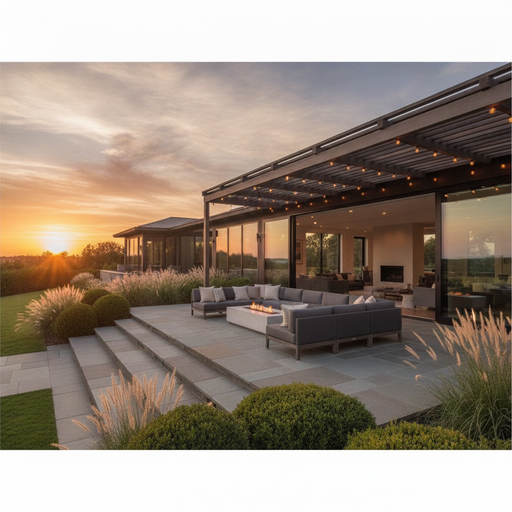
    Ranch homes often feature an L-shaped layout that creates a natural courtyard. This is the perfect spot for a central lounging area. Opt for low-profile modular sofas with deep, weather-resistant cushions ieutral tones. This keeps the sightlines clear, ensuring that the furniture doesn’t block the view of the rest of your garden. Add an oversized umbrella or a sleek pergola for those afternoons when the sun gets a bit too ambitious.

    3. The Al Fresco Culinary Hub

    If you love to entertain, an outdoor kitchen is a game-changer. For a ranch home, a linear kitchen setup built against the exterior wall works beautifully. It keeps plumbing and electrical lines close to the house while providing a station for grilling, prepping, and serving. Pair this with a long wooden harvest table under a canopy of string lights, and you have the perfect setting for summer dier parties that last long into the night.

    Landscaping for Privacy and Peace

    While the opeature of ranch living is a blessing, it can sometimes feel a bit exposed. Creating a sense of enclosure is vital for relaxation. You don’t need a ten-foot concrete wall to feel private; in fact, natural barriers are often more effective and much more beautiful.

    Consider using “softscaping” to define your boundaries. Tall ornamental grasses, such as Miscanthus or Feather Reed Grass, provide a shimmering, translucent screen that dances in the wind. For more solid privacy, a row of arborvitae or a well-manicured boxwood hedge can act as living walls. If you want a more modern look, horizontal wooden slat fences offer a contemporary “Zen” feel that complements the clean lines of ranch architecture perfectly.

    The Sensory Experience: Fire, Water, and Sound

    A true sanctuary engages all the senses. Once you have your furniture and layout settled, it’s time to add the elements that turn a “patio” into an “experience.”

    • Fire: A sunken fire pit is a classic choice for ranch homes. Because the house is low, a sunken pit maintains those precious sightlines while providing a cozy gathering spot. There is something primal and deeply relaxing about watching dancing flames as the temperature drops in the evening.
    • Water: The sound of trickling water is one of the most effective ways to mask neighborhood noise and induce a state of calm. A simple stone fountain or a modern “spillway” integrated into a retaining wall can transform the auditory environment of your backyard.
    • Scent: Don’t underestimate the power of aroma. Planting jasmine, honeysuckle, or rosemary near your seating areas ensures that every breeze carries a sweet, natural perfume.

    Lighting: Setting the Mood After Dark

    Your outdoor relaxation space shouldn’t disappear when the sun goes down. In fact, for many, the evening is when the backyard truly comes alive. The key to lighting a ranch home’s exterior is layering.

    Avoid harsh floodlights. Instead, use a mix of path lights to guide guests, uplighting on architectural trees to create drama, and warm string lights (Edison bulbs) draped over the dining area for a festive, cozy glow. If you have a deck, recessed LED lights in the stairs are both a safety feature and a beautiful design element that emphasizes the horizontal lines of your home.

    Conclusion: The Lifestyle You Deserve

    The beauty of a ranch home lies in its honesty and its coection to the earth. It doesn’t try to tower over the landscape; it sits comfortably within it. By investing in your outdoor relaxation spaces, you aren’t just increasing your property value—you are significantly enhancing your quality of life.

    Whether it’s the quiet solitude of a morning nook, the communal joy of a fire pit, or the simple luxury of a seamless transition from your living room to your garden, these spaces provide a much-needed retreat from the fast-paced digital world. Your ranch home is more than just a roof over your head; with a little creativity and plaing, it can become a sprawling, sun-soaked sanctuary that nourishes your soul every single day.

  • The Art of the Modern Facade: Why Custom Exterior Brick is Making a Stunning Comeback

    The Art of the Modern Facade: Why Custom Exterior Brick is Making a Stunning Comeback

    Imagine walking down a quiet suburban street or a bustling urban avenue. Your eyes scan the familiar silhouettes of glass, concrete, and siding. Then, suddenly, something stops you in your tracks. It is a house that doesn’t just sit on the lot—it breathes. It has texture, depth, and a rhythm that feels both ancient and futuristic. You are looking at a modern custom brick facade, and it is changing everything we thought we knew about residential architecture.

    For a long time, brick was pigeonholed as the “traditional” choice. It was the material of colonial estates and mid-century schoolhouses. But today, a revolution is happening. Architects and homeowners are rediscovering brick not as a boring red block, but as a versatile medium for artistic expression. By playing with orientation, color, and spacing, custom brickwork is defining the new standard for luxury modern exteriors.

    Beyond the Red Box: The Evolution of Brick

    The story of brick is thousands of years old, but its modern chapter is perhaps the most exciting yet. In the past, brick was primarily structural; it held the house up. Today, with the advent of steel and wood framing, brick has been liberated to become a decorative skin—a “curtain wall” that allows for incredible creative freedom.

    Modern custom facades move away from the uniform, repetitive patterns of the past. Instead of the standard ruing bond we see on every street corner, modern designs embrace “stack bonds,” where bricks are aligned perfectly in vertical and horizontal rows to create a clean, grid-like aesthetic. This simple shift in orientation transforms a traditional material into a minimalist masterpiece that complements the sharp lines of contemporary architecture.

    Playing with Light and Shadow: The Hit-and-Miss Technique

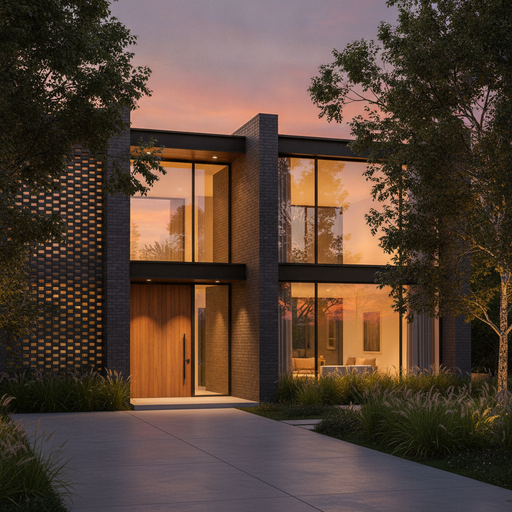
    One of the most breathtaking trends in custom brickwork is the “hit-and-miss” or perforated brick wall. By leaving intentional gaps between bricks, architects create a screen that acts like a veil for the building. During the day, sunlight filters through these gaps, casting intricate, dancing patterns of light across the interior floors. It provides privacy without sacrificing natural light or ventilation.

    At night, the effect reverses. The interior lights of the home glow through the brick perforations, making the entire house look like a glowing lantern. This interplay of light and shadow turns a static wall into a dynamic feature that changes throughout the day. It’s a tactile, three-dimensional experience that paint or flat siding simply caot replicate.

    The New Color Palette: From Obsidian to Alabaster

    If you think brick only comes in “rusty red,” think again. The modern custom facade thrives on a sophisticated color palette. We are seeing a massive surge in popularity for monochromatic looks—specifically deep charcoals, matte blacks, and shimmering silvers. These dark tones give a home an air of mystery and weight, allowing it to blend seamlessly into a wooded landscape or stand out as a bold statement in an urban setting.

    On the other end of the spectrum, long, thin “Roman-style” bricks in creamy whites and pale grays are being used to create a sense of serenity and expansiveness. These lighter bricks often feature a hand-molded texture, giving the modern design a “wabi-sabi” feel—the beauty of imperfection. When you choose a custom brick color, you aren’t just picking a shade; you are picking the mood of your home.

    Texture and Mortar: The Devil in the Details

    In modern design, the “mortar joint”—the space between the bricks—is just as important as the brick itself. In traditional masonry, the mortar is usually recessed or rounded. However, in custom modern facades, designers often use “flush” or “over-slung” mortar to create a monolithic look. When the mortar is the same color as the brick and filled to the edge, the wall looks like a single, solid piece of carved stone from a distance.

    Alternatively, some designers are opting for “shadow gaps,” where the horizontal mortar is deeply recessed but the vertical joints are filled. This emphasizes the horizontal length of the house, making a structure look lower, sleeker, and more grounded to the earth. It is these tiny, technical decisions that separate a standard brick house from a custom architectural icon.

    Material Fusion: Mixing Brick with the Modern World

    A custom brick facade rarely stands alone in modern design. Its true beauty is revealed when it is contrasted with other high-end materials. Imagine a charcoal brick wall paired with warm, natural cedar siding. The “cold” masonry and “warm” wood create a visual balance that feels organic yet disciplined.

    Large expanses of glass are also a natural partner for custom brick. The heavy, grounded nature of the brickwork provides a perfect frame for the lightness and transparency of floor-to-ceiling windows. Toss in some black steel beams or copper accents, and you have a facade that tells a story of craftsmanship and industrial elegance. This “layered” approach to materials is what gives modern homes their “wow” factor.

    The Sustainability of Style

    While we often talk about the aesthetics of custom brick, we shouldn’t overlook its practical genius. In an era where sustainability is paramount, brick is a hero. It is made from natural clay, it is incredibly durable (lasting 100 years or more), and it is completely fire-resistant. Furthermore, brick has excellent “thermal mass” properties, meaning it absorbs heat during the day and releases it slowly at night, helping to regulate the temperature of the home naturally.

    When you invest in a custom brick facade, you aren’t just buying a look; you are investing in a low-maintenance future. There is no painting, no rotting, and no warping. It is a “forever” material that ages gracefully, developing a beautiful patina over decades that only adds to its character.

    Conclusion: Building Your Legacy

    Choosing a custom exterior brick facade is an act of rebellion against the “disposable” culture of modern construction. It is a commitment to quality, texture, and timeless design. Whether you are drawn to the dark, moody tones of an urban loft or the light, airy feel of a Scandinavian-inspired villa, custom brickwork provides the tools to build something truly unique.

    As we move forward into a new decade of design, the most “modern” homes will be the ones that look back at traditional materials with fresh eyes. By embracing custom patterns, bold colors, and iovative masonry techniques, you can turn the exterior of your home into a living piece of art. Your home is your sanctuary—why not wrap it in a material that is as strong, beautiful, and enduring as the life you are building inside?

  • From Dated to Dreamy: 10 Transformative Curb Appeal Upgrades for Your Ranch-Style Home

    From Dated to Dreamy: 10 Transformative Curb Appeal Upgrades for Your Ranch-Style Home

    The Hidden Potential of the Classic Ranch

    Imagine pulling into your driveway after a long day at work. You look at your house, and instead of seeing a flat, uninspired structure that blends into the background of the neighborhood, you see a home that radiates character, warmth, and modern elegance. This is the power of curb appeal. For many homeowners, the classic ranch-style home—popularized in the 1950s and 60s—is a beloved treasure, but its low-slung, horizontal profile can sometimes feel a bit “cookie-cutter” or dated in the 21st century.

    Ranch homes are famous for their open floor plans and easy accessibility, yet their exteriors often lack the vertical interest found in two-story colonials or victorian builds. The good news? That long, linear canvas is actually a playground for creative exterior design. Whether you are looking to sell your home for top dollar or simply want to be the envy of the block, upgrading your ranch home’s curb appeal is one of the most rewarding investments you can make. Let’s dive into ten transformative upgrades that will turn your “mid-century modest” into “modern magnificent.”

    1. Create a Focal Point with a Bold Front Door

    In the world of exterior design, the front door is the “handshake” of your home. Because ranch houses are long and low, the entryway can sometimes get lost in the sea of siding and windows. To fix this, you need to create a visual “anchor.”

    Consider replacing a standard white door with something that pops. A vibrant teal, a deep navy, or even a classic “cottage red” can draw the eye immediately to the entrance. If you prefer a more organic look, a solid wood door with glass panes—perhaps in a rich walnut or oak finish—adds instant luxury. Don’t forget the hardware; swapping out tired brass for matte black or brushed gold handlesets can make a world of difference in a matter of minutes.

    2. Break the Horizontal Line with Layered Landscaping

    The most common critique of ranch homes is that they look too “flat.” You can counteract this by using landscaping to create height and depth. Instead of the traditional row of identical boxwood shrubs lining the foundation, think in layers.

    • The Tall Layer: Plant an ornamental tree like a Japanese Maple or a Flowering Dogwood slightly away from the house to add verticality.
    • The Mid-Layer: Use varying heights of pereial flowers like Lavender, Coneflowers, or ornamental grasses.
    • The Ground Layer: Use creeping thyme or colorful mulch to define the edges.

    By varying the height and texture of your plants, you lead the eye up and down, effectively “stretching” the visual height of your home.

    3. Update the Siding and Paint Palette

    Nothing dates a home faster than faded vinyl siding or a 1970s beige-on-beige color scheme. Modern ranch transformations often lean toward high-contrast palettes. We are seeing a massive trend in “Modern Farmhouse” ranch styles, featuring crisp white siding with stark black window trims.

    Alternatively, if you want something more sophisticated and grounded, try “Moody Earth Tones.” Think charcoal grays, olive greens, or deep blues paired with natural wood accents. If your home has original brick, consider a professional lime-wash. This allows the texture of the brick to show through while giving it a fresh, European-inspired finish that is much more breathable and durable than standard paint.

    4. Add Dimension with a Portico or Front Porch

    If your budget allows for a slightly larger structural change, adding a portico or extending the front porch is a game-changer. Most ranch homes have a roofline that sits flat across the front. By adding a gabled portico over the front door, you introduce a new roofline that breaks up the monotony.

    A small front porch with a few rocking chairs or a modern bench creates a “destination” on your home’s exterior. It transitions the house from a place you just enter into a place where you live. This structural addition provides shadows and depth, making the house look larger and more architecturally complex.

    5. Upgrade Your Windows and Trim

    Windows are the “eyes” of the home. Old, aluminum-framed windows not only leak heat but also look thin and cheap. Upgrading to windows with thicker frames and decorative grilles (muntins) can add a sense of craftsmanship to the exterior.

    For ranch homes, black window frames are incredibly popular right now because they provide a sharp, clean look against almost any siding color. Also, consider the trim. Wider trim around windows and doors makes them appear larger and more substantial. If your ranch has those tiny, dated shutters, consider removing them for a cleaner look, or replacing them with modern, board-and-batten style shutters that actually fit the scale of the windows.

    6. Transform the Garage Door

    On many ranch homes, the garage takes up 30% to 50% of the front-facing facade. If you have a standard, dented metal garage door, it’s dragging down your entire aesthetic. Replacing a garage door is consistently ranked as one of the best ROI (Return on Investment) home projects.

    Look for “carriage house” style doors with windows to add charm, or sleek, horizontal-slat wood doors for a mid-century modern vibe. Even if you aren’t ready to replace the door, a fresh coat of paint and some magnetic “faux hardware” can give it a surprisingly high-end look for under $50.

    7. Lighting: The Nighttime “Wow” Factor

    A home shouldn’t only look good during the day. Proper exterior lighting provides safety, but it also highlights the architectural features you’ve worked hard to improve. Replace that single, dim porch light with something substantial—perhaps an oversized lantern or a sleek, modern LED sconce.

    Incorporate “up-lighting” in your landscaping. Aiming small spotlights at your trees or against the texture of your brick creates a dramatic, high-end look at night. Path lights along the walkway not only guide guests safely to your door but also define the boundaries of your property, making the yard feel more expansive.

    8. Revitalize the Walkway

    Is your walkway a narrow, cracked concrete path? It’s time for an upgrade. A wide, welcoming walkway tells guests exactly where to go and makes your home feel more “stately.”

    Consider using oversized concrete pavers with gravel or moss in between for a contemporary look. For a more traditional ranch, flagstone or brick pavers offer a timeless appeal. Make the walkway wider than you think it needs to be—at least 4 feet—so that two people can walk side-by-side comfortably. This small change makes the entire entrance feel more grand and intentional.

    9. Modernize House Numbers and Mailboxes

    The devil is in the details. Those small, plastic house numbers from the hardware store aren’t doing you any favors. Instead, look for large, modern floating numbers in a finish that matches your door hardware (like matte black or brushed nickel).

    Place them somewhere unexpected but visible, like on a wooden plaque or directly on a pillar. Similarly, if your mailbox is at the end of the driveway, ensure it reflects the style of the house. A sleek, modern mailbox on a cedar post can tie the whole look together, showing that you’ve paid attention to every square inch of your property.

    10. Focus on the “Fifth Wall”: The Roof

    Because ranch homes are single-story, the roof is very prominent. It often accounts for a huge portion of the visual space. If your shingles are curling, discolored, or missing, no amount of flowers or paint will fix the curb appeal.

    When it’s time to re-roof, consider architectural shingles which provide more texture and shadow lines than traditional flat shingles. If you want a more premium look, a metal roof (either for the whole house or just as an accent over a porch) can provide a stuing contrast and lasts for decades. Keeping your gutters clean and in good repair is also essential; consider seamless gutters in a color that matches your trim to make them “disappear.”

    Conclusion: The Journey to a Better First Impression

    Improving the curb appeal of your ranch-style home doesn’t have to happen all at once. It’s a journey of layers. You might start this weekend by painting your front door and installing new house numbers. Next season, you might tackle the landscaping or the walkway. Over time, these individual choices cohere into a stuing transformation.

    The beauty of the ranch home lies in its simplicity. By adding texture, height, and modern accents, you aren’t just changing the look of a building; you are creating a sense of pride and a welcoming atmosphere for everyone who passes by. Your home has a story to tell—make sure the first chapter, the exterior, is a real page-turner.

  • Ranch-Style Outdoor Kitchen Ideas: Creating Your Ultimate Rustic Homestead Retreat

    Ranch-Style Outdoor Kitchen Ideas: Creating Your Ultimate Rustic Homestead Retreat

    The Magic of the Open Range in Your Backyard

    There is something inherently romantic about the idea of a ranch. It evokes images of sprawling horizons, the smell of dry earth after a summer rain, and the crackle of a wood-burning fire under a canopy of stars. When we think of ranch life, we think of a lifestyle that is grounded, authentic, and deeply coected to the land. Bringing that essence into your home through a ranch-style outdoor kitchen isn’t just about adding a place to flip burgers; it is about creating a sanctuary where the hustle of modern life fades into the background, replaced by the simple joy of cooking and eating in the fresh air.

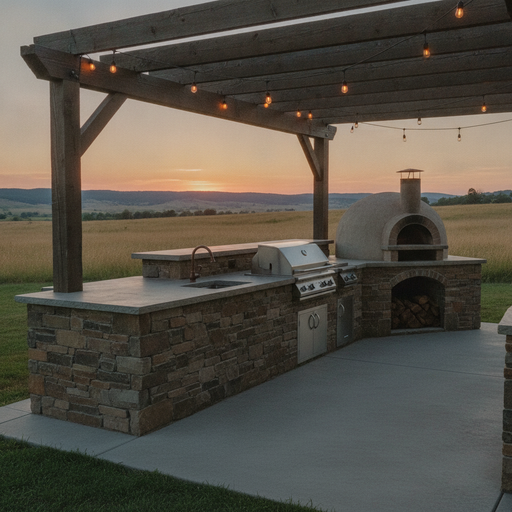
    Imagine waking up on a Saturday morning, stepping out onto a stone patio, and brewing your coffee while the sun rises over the fence line. Picture hosting a boisterous family reunion where the centerpiece isn’t a television, but a roaring wood-fired pizza oven or a heavy-duty smoker. This is the heart of the ranch outdoor kitchen. It is rugged, functional, and designed to withstand the elements while looking better with every year of use. Whether you live on a hundred-acre spread or a suburban lot, you can capture this spirit by focusing on the right materials, layout, and atmosphere.

    Embrace the Raw Beauty of Natural Materials

    The foundation of any authentic ranch design lies in its materiality. You won’t find sleek, high-gloss cabinets or delicate glass tiles here. Instead, a ranch kitchen celebrates textures that feel like they were pulled directly from the earth. Stacked stone is a staple for island bases and backsplashes. Whether you choose the warm tans of Oklahoma flagstone or the cool greys of river rock, stone provides a sense of permanence and weight that anchors the space.

    Wood is the perfect companion to stone. For a true ranch feel, look for reclaimed timber or distressed cedar. Using thick, rough-hewn beams for a pergola or overhead structure adds architectural interest and much-needed shade. For your cabinetry, consider weather-resistant woods like teak or ipe, but treat them with finishes that highlight the natural grain rather than masking it. Over time, these materials will develop a patina—a “lived-in” look that only adds to the charm of the ranch aesthetic.

    Countertops That Can Take a Beating

    On a ranch, tools are meant to be used, and your countertops are no different. Honed granite is an excellent choice because it offers a matte finish that looks more natural than polished stone. Another fan favorite is concrete. Poured-in-place concrete countertops can be customized with various pigments and even embedded with small stones or glass for a unique look. They are incredibly durable and, if sealed properly, can handle everything from hot cast-iron skillets to the occasional heavy rainstorm.

    The Heart of the Kitchen: High-Performance Appliances

    A ranch kitchen is defined by how you cook. While a standard gas grill is convenient, a true homestead-inspired setup often leans toward traditional methods. This is where wood-fired cooking takes center stage. Including a built-in wood-burning oven allows you to bake artisanal bread, roast meats with a smoky depth, and host pizza nights that your neighbors will never forget.

    For those who take their barbecue seriously, a dedicated smoker or a Santa Maria-style grill is a must. A Santa Maria grill, with its adjustable height grate over an open wood fire, is the quintessential tool of Western ranch cooking. It allows you to control the heat with precision while infusing the food with that unmistakable red oak aroma. Integrating these heavy-duty appliances into a stone island creates a professional-grade workspace that feels like a natural extension of the landscape.

    • Built-in Grills: Look for commercial-grade stainless steel that can withstand high heat and outdoor moisture.
    • Side Burners: Essential for simmering beans, corn on the cob, or homemade barbecue sauces without ruing back to the indoor kitchen.
    • Outdoor Refrigeration: Keeping drinks cold and meats ready for the grill is a luxury that makes the outdoor space fully self-sufficient.

    Designing for Social Coection

    In ranch culture, the kitchen has always been the gathering place. Your outdoor design should reflect this by prioritizing “flow” and social interaction. Instead of a simple linear counter, consider an L-shaped or U-shaped island with a raised bar height section. This allows guests to pull up a stool with a cold drink and chat with the chef without getting in the way of the prep work.

    The transition between the indoor and outdoor spaces is also crucial. Large sliding barn doors or bifold glass walls can bridge the gap, making the outdoor kitchen feel like a natural room of the house. To make the space usable year-round, consider adding a massive stone fireplace nearby. A fireplace doesn’t just provide warmth; it serves as a visual anchor and a place for people to gather after the meal is finished, perhaps with a glass of bourbon or a plate of s’mores.

    Providing Shelter: Pergolas and Pavilions

    The wide-open sky is beautiful, but the midday sun can be brutal. A ranch kitcheeeds a sturdy overhead structure to define the space and provide comfort. A heavy timber pergola is a classic choice, offering a dappled shade that feels organic. For those in rainier climates, a full pavilion with a metal roof—perhaps in a rustic rusted Corten steel or a classic galvanized finish—offers total protection from the elements.

    Lighting is another layer of the design that shouldn’t be overlooked. To maintain the ranch vibe, avoid harsh, bright floodlights. Instead, opt for wrought-iron lanterns, string lights with oversized Edison bulbs, and low-voltage LEDs tucked under the countertop overhangs. The goal is to mimic the soft glow of a campfire, creating an inviting atmosphere that beckons you to stay just a little bit longer.

    Incorporating Practical Ranch Elements

    Think about the details that make a ranch functional. A deep farmhouse-style apron sink in hammered copper or stainless steel makes cleanup easy and fits the aesthetic perfectly. You might also include built-in trash bins and plenty of storage for charcoal, wood logs, and cast-iron cookware. Having everything within reach means you can spend more time enjoying the outdoors and less time ruing back and forth to the house.

    Conclusion: Living the Dream

    Building a ranch-style outdoor kitchen is an investment in your quality of life. It is an invitation to slow down, to appreciate the craft of cooking over a real fire, and to recoect with friends and family in a setting that feels timeless. By choosing honest materials like stone and wood, investing in high-quality cooking tools, and designing a space that encourages conversation, you create more than just a place to eat—you create a legacy of memories.

    Whether your view is of a rolling meadow or a carefully manicured garden, the spirit of the ranch is about freedom and hospitality. When you fire up that grill and hear the first sizzle of the meat against the grate, you aren’t just making dier; you are participating in a tradition of outdoor living that is as old as the hills themselves. So, grab a blueprint, pick out your favorite stone, and start building your own slice of paradise under the open sky.