Tag: home renovation

  • 10 Transformative Ranch Home Curb Appeal Upgrades to Modernize Your Exterior

    10 Transformative Ranch Home Curb Appeal Upgrades to Modernize Your Exterior

    The Story of the Classic American Ranch

    Imagine driving through a quiet, leaf-canopied neighborhood. You see rows of houses, but one particular style stands out for its low profile and long, horizontal lines: the classic American Ranch. Born in the 1930s and exploding in popularity during the post-war era of the 1950s, the ranch-style home was designed for simplicity, accessibility, and a seamless coection to the outdoors. However, what was once “cutting-edge” can sometimes feel a bit “cookie-cutter” or dated in the modern world.

    I remember visiting a friend’s house, a sturdy brick ranch built in 1962. From the curb, it looked a bit flat, almost hiding behind its overgrown boxwood hedges. It had “good bones,” as architects say, but it lacked a certain “wow” factor. It’s a common story for many homeowners. You love the single-story living and the open floor plan, but the exterior feels like a relic of the past. The good news? Ranch homes are the perfect “blank canvas” for curb appeal upgrades. Because of their simple geometry, even small changes can create a dramatic visual impact.

    In this guide, we are going to walk through ten transformative upgrades that will turn your ranch home from a dated dwelling into the neighborhood showstopper.

    1. Define the Entryway with a Bold Front Door

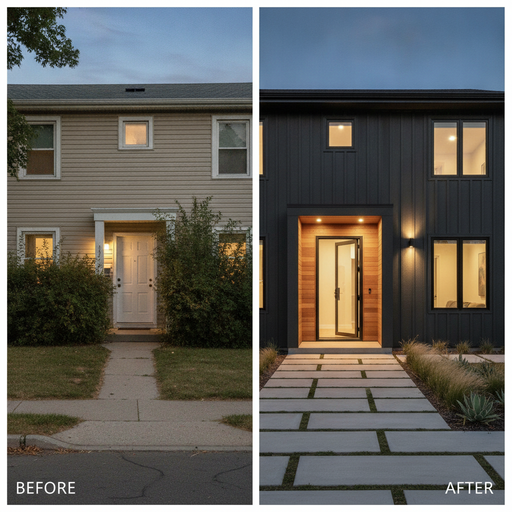
    The front door is essentially the “handshake” of your home. In a long, horizontal ranch house, the entrance can sometimes get lost in the sea of siding or brick. To fix this, you need to create a focal point. Modernizing your front door is perhaps the most cost-effective way to boost curb appeal instantly.

    Consider replacing a traditional solid wood door with something that features glass panels to let iatural light. If a full replacement isn’t in the budget, never underestimate the power of paint. For ranch homes, bold colors like deep navy, sage green, or even a vibrant mustard yellow can provide a stuing contrast against neutral siding. Pair this with modern hardware—think matte black or brushed gold—to give it a contemporary edge.

    2. Break the Horizontal Line with Layered Landscaping

    One of the biggest challenges with ranch homes is their “flatness.” Since everything is on one level, the eye tends to slide right across the house without stopping. To combat this, you need to introduce verticality through landscaping.

    Instead of a single row of low shrubs, think in layers. Start with taller ornamental trees like a Japanese Maple or a Dogwood near the corners of the house to soften the sharp angles. In front of those, place medium-sized pereials, and finish with low-growing groundcovers or flowers at the very front of the bed. By creating different heights, you force the eye to move up and down, giving the property a sense of depth and richness it previously lacked.

    3. Modernize the Siding and Texture

    Many older ranch homes are covered in dated vinyl siding or monochromatic brick. While there’s nothing wrong with brick, a sea of a single color can look monotonous. One of the trendiest upgrades for ranch homes today is “mixed media” exteriors.

    Consider adding stone veneer to the lower third of your home or around the entryway. If you have siding, swapping standard horizontal planks for vertical “board and batten” can make the house appear taller and more modern. Even painting your brick—a move that was once controversial but is now highly popular—in a crisp white or a sophisticated charcoal gray can completely reinvent the home’s silhouette.

    4. Upgrade to Architectural Windows

    Windows are often referred to as the “eyes” of the home. Old, double-hung windows with thick white plastic grids can make a ranch look aged. To modernize, consider windows with thin, dark frames (like black or dark bronze). Large picture windows are a hallmark of mid-century ranch design, so if you have them, make them a feature. Removing old-fashioned shutters can also clean up the lines of the house, giving it a sleeker, more “Mid-Century Modern” vibe that is very much in style right now.

    5. Lighting: From Functional to Atmospheric

    Most ranch homes come with a single, lonely light fixture next to the front door. To truly upgrade your curb appeal, you need a comprehensive lighting plan that works long after the sun goes down. Replace that dated porch light with a modern lantern or a sleek LED sconce.

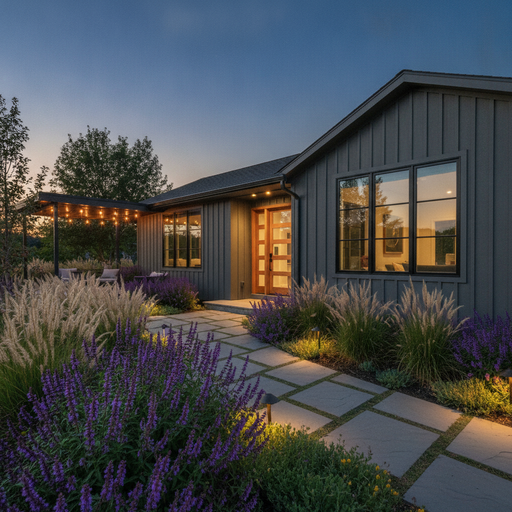
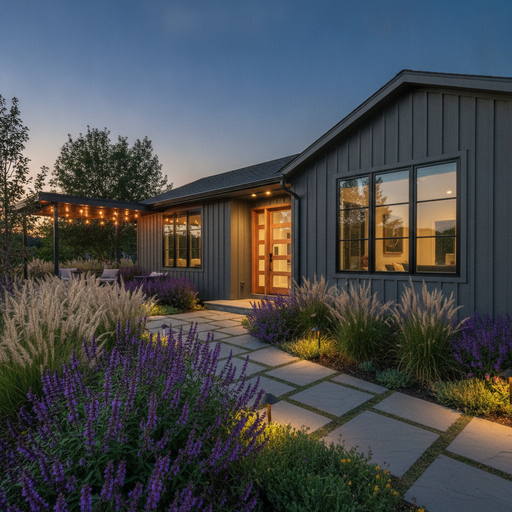
    Beyond the porch, add path lights along the walkway to guide guests to your door. For a truly high-end look, install “uplighting” at the base of your trees or against certain sections of the house. This creates shadows and highlights that make the architecture look more expensive and secure at night.

    6. Transform the Walkway

    The path to your front door should be an invitation. Many ranch homes have a narrow, cracked concrete sidewalk that runs parallel to the house. This reinforces that “flat” look we want to avoid. If you have the opportunity, redesign the walkway to have a gentle curve. Using materials like flagstone, pavers, or even stamped concrete can add texture and color. A wider path (at least 4 feet) feels more luxurious and allows two people to walk side-by-side, making the entrance feel much more welcoming.

    7. Add a Porch or Portico

    Because ranch homes often have very little “overhang” at the front door, the entrance can feel exposed. Adding a small front porch or a portico (a roofed structure over the door) can completely change the house’s profile. This adds a “protrusion” that breaks up the long roofline. Not only does this provide shelter from the rain, but it also gives you a place to add architectural details like wooden beams or stone pillars, which add a sense of craftsmanship and “weight” to the design.

    8. Creative Use of House Numbers and Mailboxes

    When it comes to curb appeal, the devil is in the details. Often, homeowners overlook the small things like house numbers and the mailbox. For a ranch home, look for oversized, modern house numbers. Floating metal numbers in a sans-serif font look incredible against wood or brick. Similarly, if your mailbox is at the end of the driveway, replace the standard plastic box with a modern wooden or metal design that matches your home’s new aesthetic. These small investments offer a high return on visual appeal.

    9. Soften the Hardscapes with Flower Boxes

    If your ranch home has a lot of concrete or brick, you might need to “soften” the look with more greenery. Window boxes are a classic solution. They bring the garden up to the house and add a splash of color at eye level. For a ranch home, choose long, rectangular boxes that mimic the house’s horizontal lines. Fill them with a mix of “thrillers” (tall plants), “fillers” (bushy plants), and “spillers” (vines that hang over the edge) for a professional look.

    10. The Power of a Clean Roofline and Gutters

    Finally, we have to talk about the roof. Because ranch homes are low, the roof accounts for a large percentage of what people see from the street. If your shingles are curling or covered in moss, no amount of flowers will save your curb appeal. Keep your gutters clean and consider upgrading to seamless aluminum gutters in a dark color that matches your trim. If it’s time for a new roof, architectural shingles add texture and “shadow lines” that make the roof look more substantial and attractive.

    Bringing It All Together

    Upgrading a ranch home is a journey of balance. You want to honor the simplicity of the original design while introducing modern textures, colors, and vertical elements. By focusing on the entryway, layering your landscape, and paying attention to the small details like lighting and hardware, you can transform a “simple” house into a stuing home.

    Remember, curb appeal isn’t just for your neighbors or for a potential buyer—it’s for you. There is a special kind of joy that comes from turning the corner into your street and seeing a home that looks fresh, cared for, and full of personality. Your ranch home has waited decades for this makeover; it’s time to give it the spotlight it deserves.
  • 10 Transformative Ranch Home Curb Appeal Upgrades to Modernize Your Exterior

    10 Transformative Ranch Home Curb Appeal Upgrades to Modernize Your Exterior

    The Story of the Classic American Ranch

    Imagine driving through a quiet, leaf-canopied neighborhood. You see rows of houses, but one particular style stands out for its low profile and long, horizontal lines: the classic American Ranch. Born in the 1930s and exploding in popularity during the post-war era of the 1950s, the ranch-style home was designed for simplicity, accessibility, and a seamless coection to the outdoors. However, what was once “cutting-edge” can sometimes feel a bit “cookie-cutter” or dated in the modern world.

    I remember visiting a friend’s house, a sturdy brick ranch built in 1962. From the curb, it looked a bit flat, almost hiding behind its overgrown boxwood hedges. It had “good bones,” as architects say, but it lacked a certain “wow” factor. It’s a common story for many homeowners. You love the single-story living and the open floor plan, but the exterior feels like a relic of the past. The good news? Ranch homes are the perfect “blank canvas” for curb appeal upgrades. Because of their simple geometry, even small changes can create a dramatic visual impact.

    In this guide, we are going to walk through ten transformative upgrades that will turn your ranch home from a dated dwelling into the neighborhood showstopper.

    1. Define the Entryway with a Bold Front Door

    The front door is essentially the “handshake” of your home. In a long, horizontal ranch house, the entrance can sometimes get lost in the sea of siding or brick. To fix this, you need to create a focal point. Modernizing your front door is perhaps the most cost-effective way to boost curb appeal instantly.

    Consider replacing a traditional solid wood door with something that features glass panels to let iatural light. If a full replacement isn’t in the budget, never underestimate the power of paint. For ranch homes, bold colors like deep navy, sage green, or even a vibrant mustard yellow can provide a stuing contrast against neutral siding. Pair this with modern hardware—think matte black or brushed gold—to give it a contemporary edge.

    2. Break the Horizontal Line with Layered Landscaping

    One of the biggest challenges with ranch homes is their “flatness.” Since everything is on one level, the eye tends to slide right across the house without stopping. To combat this, you need to introduce verticality through landscaping.

    Instead of a single row of low shrubs, think in layers. Start with taller ornamental trees like a Japanese Maple or a Dogwood near the corners of the house to soften the sharp angles. In front of those, place medium-sized pereials, and finish with low-growing groundcovers or flowers at the very front of the bed. By creating different heights, you force the eye to move up and down, giving the property a sense of depth and richness it previously lacked.

    3. Modernize the Siding and Texture

    Many older ranch homes are covered in dated vinyl siding or monochromatic brick. While there’s nothing wrong with brick, a sea of a single color can look monotonous. One of the trendiest upgrades for ranch homes today is “mixed media” exteriors.

    Consider adding stone veneer to the lower third of your home or around the entryway. If you have siding, swapping standard horizontal planks for vertical “board and batten” can make the house appear taller and more modern. Even painting your brick—a move that was once controversial but is now highly popular—in a crisp white or a sophisticated charcoal gray can completely reinvent the home’s silhouette.

    4. Upgrade to Architectural Windows

    Windows are often referred to as the “eyes” of the home. Old, double-hung windows with thick white plastic grids can make a ranch look aged. To modernize, consider windows with thin, dark frames (like black or dark bronze). Large picture windows are a hallmark of mid-century ranch design, so if you have them, make them a feature. Removing old-fashioned shutters can also clean up the lines of the house, giving it a sleeker, more “Mid-Century Modern” vibe that is very much in style right now.

    5. Lighting: From Functional to Atmospheric

    Most ranch homes come with a single, lonely light fixture next to the front door. To truly upgrade your curb appeal, you need a comprehensive lighting plan that works long after the sun goes down. Replace that dated porch light with a modern lantern or a sleek LED sconce.

    Beyond the porch, add path lights along the walkway to guide guests to your door. For a truly high-end look, install “uplighting” at the base of your trees or against certain sections of the house. This creates shadows and highlights that make the architecture look more expensive and secure at night.

    6. Transform the Walkway

    The path to your front door should be an invitation. Many ranch homes have a narrow, cracked concrete sidewalk that runs parallel to the house. This reinforces that “flat” look we want to avoid. If you have the opportunity, redesign the walkway to have a gentle curve. Using materials like flagstone, pavers, or even stamped concrete can add texture and color. A wider path (at least 4 feet) feels more luxurious and allows two people to walk side-by-side, making the entrance feel much more welcoming.

    7. Add a Porch or Portico

    Because ranch homes often have very little “overhang” at the front door, the entrance can feel exposed. Adding a small front porch or a portico (a roofed structure over the door) can completely change the house’s profile. This adds a “protrusion” that breaks up the long roofline. Not only does this provide shelter from the rain, but it also gives you a place to add architectural details like wooden beams or stone pillars, which add a sense of craftsmanship and “weight” to the design.

    8. Creative Use of House Numbers and Mailboxes

    When it comes to curb appeal, the devil is in the details. Often, homeowners overlook the small things like house numbers and the mailbox. For a ranch home, look for oversized, modern house numbers. Floating metal numbers in a sans-serif font look incredible against wood or brick. Similarly, if your mailbox is at the end of the driveway, replace the standard plastic box with a modern wooden or metal design that matches your home’s new aesthetic. These small investments offer a high return on visual appeal.

    9. Soften the Hardscapes with Flower Boxes

    If your ranch home has a lot of concrete or brick, you might need to “soften” the look with more greenery. Window boxes are a classic solution. They bring the garden up to the house and add a splash of color at eye level. For a ranch home, choose long, rectangular boxes that mimic the house’s horizontal lines. Fill them with a mix of “thrillers” (tall plants), “fillers” (bushy plants), and “spillers” (vines that hang over the edge) for a professional look.

    10. The Power of a Clean Roofline and Gutters

    Finally, we have to talk about the roof. Because ranch homes are low, the roof accounts for a large percentage of what people see from the street. If your shingles are curling or covered in moss, no amount of flowers will save your curb appeal. Keep your gutters clean and consider upgrading to seamless aluminum gutters in a dark color that matches your trim. If it’s time for a new roof, architectural shingles add texture and “shadow lines” that make the roof look more substantial and attractive.

    Bringing It All Together

    Upgrading a ranch home is a journey of balance. You want to honor the simplicity of the original design while introducing modern textures, colors, and vertical elements. By focusing on the entryway, layering your landscape, and paying attention to the small details like lighting and hardware, you can transform a “simple” house into a stuing home.

    Remember, curb appeal isn’t just for your neighbors or for a potential buyer—it’s for you. There is a special kind of joy that comes from turning the corner into your street and seeing a home that looks fresh, cared for, and full of personality. Your ranch home has waited decades for this makeover; it’s time to give it the spotlight it deserves.
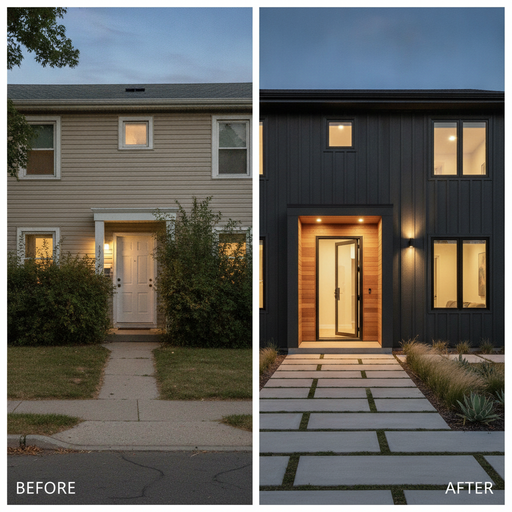
  • From Dated to Dreamy: 10 Modern Exterior House Renovation Ideas to Boost Your Curb Appeal

    From Dated to Dreamy: 10 Modern Exterior House Renovation Ideas to Boost Your Curb Appeal

    The First Impression: Why Your Home’s Exterior Matters

    Imagine pulling into your driveway after a long day at work. You look up, and instead of seeing a tired, weathered facade that feels like a relic of the past, you are greeted by a sleek, sophisticated sanctuary that reflects exactly who you are today. That is the power of a modern exterior renovation. We often spend so much time obsessing over kitchen backsplashes and living room layouts that we forget the exterior is the “handshake” of our home—it’s the first thing guests see and the primary factor in your property’s value.

    Modern design isn’t just about cold minimalism or looking like a tech office. It’s about intentionality, clean lines, and a harmonious relationship between the structure and its surroundings. Whether you live in a mid-century ranch, a traditional suburban two-story, or a charming bungalow, there are ways to infuse modern aesthetics into your home’s “skin” that feel timeless rather than trendy. In this guide, we’ll explore the most impactful renovation ideas to help you transition your home from dated to dreamy.

    1. Embrace the Power of High-Contrast Color Palettes

    One of the fastest ways to modernize an exterior is through color. Gone are the days when every house on the block had to be a safe shade of beige or eggshell. Today, modern homes are embracing high contrast. Think deep charcoals, moody blacks, or “iron ore” grays paired with crisp white trim or warm wood accents.

    A dark exterior can make a house appear more grounded and expensive. If you aren’t ready to commit to a fully dark house, consider the “tuxedo look”—white siding with black window frames and black gutters. This classic yet modern combination creates sharp lines that define the architectural shape of your home, making even an older structure look instantly updated.

    2. Mix Your Materials for Visual Depth

    A common mistake in older home design was using a single material for the entire exterior. Modern architecture thrives on texture. By mixing materials, you create visual interest and break up large, flat surfaces. Consider a combination of:

    • Horizontal Siding: Use classic fiber cement boards for durability.
    • Natural Wood Accents: Cedar or redwood panels around the entryway add warmth and an organic feel.
    • Stone Veneer: Incorporating stacked stone or large-format concrete tiles near the foundation or on a chimney adds a sense of permanence.
    • Metal Paneling: Corrugated or flat metal panels can add an industrial-modern edge to specific sections of the house.

    The key is balance. You don’t want the house to look busy; you want it to look curated. Choose one dominant material and use two others as accents to highlight architectural features like an entryway or a second-story bump-out.

    3. The “Black Window” Revolution

    If you have the budget for a single major change, let it be your windows. For decades, white vinyl windows were the standard, but they often look cheap and dated. Modern design has pivoted toward black or dark bronze frames. These dark frames act like a picture frame for the view outside, drawing the eye and providing a sophisticated, high-end look.

    To go truly modern, consider larger panes of glass with thier frames. If your home has traditional “grids” or “muntins” (those little bars that divide the glass), consider removing them or opting for a simple horizontal grid. This opens up the facade and allows more natural light to flood your interior, bridging the gap between inside and out.

    4. Redefine the Entryway

    Your front door is the focal point of the entire exterior. A modern renovation often involves replacing a standard, ornate wooden door with something more architectural. Look for doors with clean geometric lines, frosted glass inserts, or even oversized “pivot” doors if your structure allows for it.

    Don’t stop at the door. Consider the hardware—swap out brass handlesets for matte black or brushed gold linear pulls. Even your house numbers should get an upgrade. Modern, sans-serif typography in a vertical or horizontal layout can make a significant difference in the overall “vibe” of your porch.

    5. Modernize Your Landscaping (Xeriscaping and Geometry)

    You can renovate the house itself, but if the bushes are overgrown and the lawn is a messy patch of weeds, the modern look won’t stick. Modern landscaping is all about structure and intentionality. Instead of messy flower beds, think about:

    • Geometric Concrete Pavers: Use large rectangular stones with gravel or “steppable” ground cover in between.
    • Native Plants: Choose plants that are native to your region. They look more natural and require less water (a practice known as xeriscaping).
    • Mass Planting: Instead of one of everything, plant a dozen of the same ornamental grass in a neat row. This creates a clean, architectural look.
    • Defined Edges: Use steel or concrete edging to create sharp lines between your lawn, mulch, and walkways.

    6. Strategic Outdoor Lighting

    A modern home should look just as good at night as it does during the day. Modern lighting is about “layering.” You want more than just a single porch light. Use LED strip lighting under the eaves or along the stairs to create a soft glow. Use “up-lighting” to highlight a beautiful tree or a textured stone wall. Modern sconces—typically simple cylinders or cubes that cast light both up and down—can flank the front door to create a dramatic, welcoming entrance.

    7. Clean Up the Roofline

    The roof is often the most overlooked part of an exterior renovation. While you might not be able to change the pitch of your roof without a massive structural overhaul, you can modernize the materials. A standing-seam metal roof is the gold standard for modern homes. It’s durable, sleek, and comes in beautiful dark finishes that complement a modern color palette.

    If a metal roof isn’t in the cards, choose architectural shingles in a solid, dark color like charcoal or black. Avoid “multi-tonal” shingles that can look busy and dated. Additionally, ensure your gutters and downspouts are integrated into the design. Square-profile gutters in a color that matches your trim will disappear into the house rather than standing out as an eyesore.

    8. Garage Door Upgrades

    In many suburban homes, the garage door takes up 30% or more of the front facade. If your garage door is a standard white raised-panel design, it’s dragging your home’s aesthetic down. A modern garage door—perhaps one with frosted glass panels or a sleek wood-slat design—can completely transform the house. It turns a functional necessity into a design statement.

    9. Creating Outdoor Living Transitions

    Modern design emphasizes the “indoor-outdoor flow.” If your renovation allows, consider adding a modern deck or a front patio area. Use horizontal cable railings or glass panels instead of traditional wooden balusters. This keeps the sightlines open and maintains that minimalist aesthetic. Even a simple concrete pad with some modern Adirondack chairs and a fire pit can signal that your home is designed for a modern lifestyle.

    10. Focus on the Details: Mailboxes and Hardware

    Finally, don’t forget the small things. A modern renovation is often a sum of its parts. Replace that old plastic mailbox with a sleek metal one. Update your doorbell to a smart, minimalist version. Ensure your outdoor outlets have modern, low-profile covers. These details might seem small, but when they all align with a singular modern vision, the result is a home that feels cohesive, expensive, and deeply personal.

    Conclusion: The Journey to a Modern Home

    Renovating the exterior of your home is a journey of transformation. It’s about stripping away the uecessary and highlighting the beauty of form and function. By focusing on clean lines, a sophisticated color palette, and a mix of high-quality materials, you can take a house that feels stuck in the past and bring it firmly into the present. Remember, a modern exterior isn’t just about following trends—it’s about creating a timeless space that you are proud to call home every time you turn the corner into your driveway.

  • From Dated to Dreamy: 10 Modern Exterior House Renovation Ideas to Boost Your Curb Appeal

    From Dated to Dreamy: 10 Modern Exterior House Renovation Ideas to Boost Your Curb Appeal

    The First Impression: Why Your Home’s Exterior Matters

    Imagine pulling into your driveway after a long day at work. You look up, and instead of seeing a tired, weathered facade that feels like a relic of the past, you are greeted by a sleek, sophisticated sanctuary that reflects exactly who you are today. That is the power of a modern exterior renovation. We often spend so much time obsessing over kitchen backsplashes and living room layouts that we forget the exterior is the “handshake” of our home—it’s the first thing guests see and the primary factor in your property’s value.

    Modern design isn’t just about cold minimalism or looking like a tech office. It’s about intentionality, clean lines, and a harmonious relationship between the structure and its surroundings. Whether you live in a mid-century ranch, a traditional suburban two-story, or a charming bungalow, there are ways to infuse modern aesthetics into your home’s “skin” that feel timeless rather than trendy. In this guide, we’ll explore the most impactful renovation ideas to help you transition your home from dated to dreamy.

    1. Embrace the Power of High-Contrast Color Palettes

    One of the fastest ways to modernize an exterior is through color. Gone are the days when every house on the block had to be a safe shade of beige or eggshell. Today, modern homes are embracing high contrast. Think deep charcoals, moody blacks, or “iron ore” grays paired with crisp white trim or warm wood accents.

    A dark exterior can make a house appear more grounded and expensive. If you aren’t ready to commit to a fully dark house, consider the “tuxedo look”—white siding with black window frames and black gutters. This classic yet modern combination creates sharp lines that define the architectural shape of your home, making even an older structure look instantly updated.

    2. Mix Your Materials for Visual Depth

    A common mistake in older home design was using a single material for the entire exterior. Modern architecture thrives on texture. By mixing materials, you create visual interest and break up large, flat surfaces. Consider a combination of:

    • Horizontal Siding: Use classic fiber cement boards for durability.
    • Natural Wood Accents: Cedar or redwood panels around the entryway add warmth and an organic feel.
    • Stone Veneer: Incorporating stacked stone or large-format concrete tiles near the foundation or on a chimney adds a sense of permanence.
    • Metal Paneling: Corrugated or flat metal panels can add an industrial-modern edge to specific sections of the house.

    The key is balance. You don’t want the house to look busy; you want it to look curated. Choose one dominant material and use two others as accents to highlight architectural features like an entryway or a second-story bump-out.

    3. The “Black Window” Revolution

    If you have the budget for a single major change, let it be your windows. For decades, white vinyl windows were the standard, but they often look cheap and dated. Modern design has pivoted toward black or dark bronze frames. These dark frames act like a picture frame for the view outside, drawing the eye and providing a sophisticated, high-end look.

    To go truly modern, consider larger panes of glass with thier frames. If your home has traditional “grids” or “muntins” (those little bars that divide the glass), consider removing them or opting for a simple horizontal grid. This opens up the facade and allows more natural light to flood your interior, bridging the gap between inside and out.

    4. Redefine the Entryway

    Your front door is the focal point of the entire exterior. A modern renovation often involves replacing a standard, ornate wooden door with something more architectural. Look for doors with clean geometric lines, frosted glass inserts, or even oversized “pivot” doors if your structure allows for it.

    Don’t stop at the door. Consider the hardware—swap out brass handlesets for matte black or brushed gold linear pulls. Even your house numbers should get an upgrade. Modern, sans-serif typography in a vertical or horizontal layout can make a significant difference in the overall “vibe” of your porch.

    5. Modernize Your Landscaping (Xeriscaping and Geometry)

    You can renovate the house itself, but if the bushes are overgrown and the lawn is a messy patch of weeds, the modern look won’t stick. Modern landscaping is all about structure and intentionality. Instead of messy flower beds, think about:

    • Geometric Concrete Pavers: Use large rectangular stones with gravel or “steppable” ground cover in between.
    • Native Plants: Choose plants that are native to your region. They look more natural and require less water (a practice known as xeriscaping).
    • Mass Planting: Instead of one of everything, plant a dozen of the same ornamental grass in a neat row. This creates a clean, architectural look.
    • Defined Edges: Use steel or concrete edging to create sharp lines between your lawn, mulch, and walkways.

    6. Strategic Outdoor Lighting

    A modern home should look just as good at night as it does during the day. Modern lighting is about “layering.” You want more than just a single porch light. Use LED strip lighting under the eaves or along the stairs to create a soft glow. Use “up-lighting” to highlight a beautiful tree or a textured stone wall. Modern sconces—typically simple cylinders or cubes that cast light both up and down—can flank the front door to create a dramatic, welcoming entrance.

    7. Clean Up the Roofline

    The roof is often the most overlooked part of an exterior renovation. While you might not be able to change the pitch of your roof without a massive structural overhaul, you can modernize the materials. A standing-seam metal roof is the gold standard for modern homes. It’s durable, sleek, and comes in beautiful dark finishes that complement a modern color palette.

    If a metal roof isn’t in the cards, choose architectural shingles in a solid, dark color like charcoal or black. Avoid “multi-tonal” shingles that can look busy and dated. Additionally, ensure your gutters and downspouts are integrated into the design. Square-profile gutters in a color that matches your trim will disappear into the house rather than standing out as an eyesore.

    8. Garage Door Upgrades

    In many suburban homes, the garage door takes up 30% or more of the front facade. If your garage door is a standard white raised-panel design, it’s dragging your home’s aesthetic down. A modern garage door—perhaps one with frosted glass panels or a sleek wood-slat design—can completely transform the house. It turns a functional necessity into a design statement.

    9. Creating Outdoor Living Transitions

    Modern design emphasizes the “indoor-outdoor flow.” If your renovation allows, consider adding a modern deck or a front patio area. Use horizontal cable railings or glass panels instead of traditional wooden balusters. This keeps the sightlines open and maintains that minimalist aesthetic. Even a simple concrete pad with some modern Adirondack chairs and a fire pit can signal that your home is designed for a modern lifestyle.

    10. Focus on the Details: Mailboxes and Hardware

    Finally, don’t forget the small things. A modern renovation is often a sum of its parts. Replace that old plastic mailbox with a sleek metal one. Update your doorbell to a smart, minimalist version. Ensure your outdoor outlets have modern, low-profile covers. These details might seem small, but when they all align with a singular modern vision, the result is a home that feels cohesive, expensive, and deeply personal.

    Conclusion: The Journey to a Modern Home

    Renovating the exterior of your home is a journey of transformation. It’s about stripping away the uecessary and highlighting the beauty of form and function. By focusing on clean lines, a sophisticated color palette, and a mix of high-quality materials, you can take a house that feels stuck in the past and bring it firmly into the present. Remember, a modern exterior isn’t just about following trends—it’s about creating a timeless space that you are proud to call home every time you turn the corner into your driveway.

  • From Curb Appeal to Character: The Ultimate Guide to Custom Exterior Siding Materials

    From Curb Appeal to Character: The Ultimate Guide to Custom Exterior Siding Materials

    The Story of Your Home Begins at the Curb

    Imagine pulling into your driveway after a long day. Before you even turn off the engine, you catch a glimpse of your house. What does it say to you? Does it whisper tales of classic craftsmanship, or does it shout with the bold lines of modern iovation? Your home’s exterior siding is more than just a protective shell; it is the “skin” of your sanctuary, the first impression you give to the world, and the most significant factor in your home’s curb appeal.

    For years, homeowners felt limited to a handful of “standard” options—usually whatever was on sale at the local hardware store. But today, the world of custom exterior siding has exploded. We are living in a golden age of home design where materials, textures, and colors can be blended to create a look that is uniquely yours. Whether you are building your dream home from scratch or giving an old favorite a much-needed facelift, choosing the right siding is one of the most important decisions you will make. Let’s walk through the most compelling custom siding options available today and find the one that tells your story.

    The Versatile Hero: Fiber Cement Siding

    If there were a popularity contest for siding materials, fiber cement would likely take the crown. It is the ultimate “chameleon” of the industry. Made from a mixture of cement, sand, and cellulose fibers, this material can be molded to look like almost anything—from traditional wood clapboard to sleek, modern panels.

    Why do homeowners love it? Because it offers the beauty of wood without the heartbreak of rot or termites. It is incredibly durable, fire-resistant, and holds paint like a dream. Brands like James Hardie have pioneered this space, offering “ColorPlus” technology that ensures your home stays vibrant for decades. If you want a custom look that mimics a historic cedar cottage but requires the maintenance of a brick fortress, fiber cement is your best friend.

    Customizing with Fiber Cement

    • Texture: Choose between smooth finishes for a modern look or wood-grain textures for a rustic feel.
    • Style: Available in planks, shingles (shakes), or large architectural panels for a minimalist aesthetic.
    • Trim: Use contrasting trim colors to make your windows and corners pop.

    The Timeless Elegance of Natural Wood

    There is something about natural wood that touches the soul. It feels organic, warm, and grounded. For the homeowner who values authenticity above all else, custom wood siding is the gold standard. Whether it’s the rich reds of Western Red Cedar or the silver-grey weathering of Redwood, natural wood provides a character that synthetic materials struggle to perfectly replicate.

    Customizing wood siding is where the artistry really happens. You aren’t just picking a color; you’re picking a grade of wood, a grain pattern, and a profile. From classic tongue-and-groove to the rugged charm of “live edge” siding, wood allows your home to blend seamlessly into a natural landscape.

    However, beauty comes with a responsibility. Wood requires regular staining or sealing to prevent moisture damage. But for many, the effort is a small price to pay for a home that ages gracefully and develops a unique patina over time.

    Modern Sophistication: Metal Siding

    Gone are the days when metal siding was reserved for barns and warehouses. In the world of high-end custom homes, metal—specifically aluminum and steel—is making a massive comeback. It is the darling of architects who specialize in “Industrial Chic” or “Modern Farmhouse” designs.

    Metal siding is incredibly sleek. It offers clean, sharp lines that are impossible to achieve with thicker materials. It’s also one of the most sustainable options on the market, as it is often made from recycled content and is 100% recyclable at the end of its long life. If you live in an area prone to wildfires or extreme weather, metal is a powerhouse of protection.

    Metal Siding Variations

    • Corrugated Panels: Adds a rhythmic, textured look that plays with light and shadow.
    • Longboard Aluminum: Specialized planks that look exactly like wood but offer the lifetime durability of metal.
    • Standing Seam: Often used on roofs, but increasingly popular as a vertical wall cladding for a dramatic, soaring effect.

    The Rugged Luxury of Stone Veneer

    If you want your home to feel permanent, sturdy, and prestigious, stone is the answer. While a full-depth stone wall is often prohibitively expensive and heavy, custom stone veneer has changed the game. These are thin slices of real or manufactured stone that can be applied to the exterior of your home like a puzzle.

    The beauty of stone veneer is in its ability to act as an accent. Very few people clad their entire house in stone; instead, they use it to “anchor” the design. Imagine a home with dark charcoal fiber cement siding and a towering stone chimney, or a stone “skirt” that runs along the foundation. It adds a tactile, three-dimensional element that makes the architecture feel grounded to the earth.

    Engineered Wood: The Best of Both Worlds

    For those who love the look of wood but have a busy lifestyle that doesn’t allow for constant maintenance, engineered wood (such as LP SmartSide) is a revolutionary choice. It is made from wood strands treated with zinc borate and waxes, then bonded with industrial-grade resins. The result is a product that looks and cuts just like real wood but is significantly more resistant to moisture, fungal decay, and impacts.

    Because it is an engineered product, the planks come in longer lengths (up to 16 feet), which means fewer seams on your walls. Fewer seams mean a cleaner, more custom look that keeps the eyes focused on the design rather than the joints.

    The Art of the Mix: Creating a Custom Facade

    The most stuing modern homes don’t use just one material. They use a “palette” of materials. This is where you can truly let your personality shine. The secret to a high-end custom look is contrast.

    Think about mixing textures. You might use smooth, dark grey metal panels on the upper floor to contrast with a warm, horizontal cedar siding on the ground floor. Or perhaps you pair white board-and-batten siding with black-framed windows and a stone entryway. By mixing materials, you define different sections of your home, creating visual interest and “breaking up” large walls that might otherwise look boring.

    Climate Considerations: Form Follows Function

    While aesthetics are vital, your choice of custom siding must also be practical for your environment. A material that thrives in the dry heat of Arizona might struggle in the humid, salty air of the Florida coast.

    • For Coastal Areas: Look for fiber cement or high-grade aluminum. These materials resist the corrosive effects of salt spray.
    • For Humid/Rainy Climates: Avoid natural wood unless you are prepared for heavy maintenance. Engineered wood or vinyl-alternatives are better at resisting rot.
    • For Extreme Cold: Ensure your siding choice allows for proper insulation and handles expansion and contraction without cracking.

    Conclusion: Investing in Your Home’s Identity

    Choosing your exterior siding is a journey of discovery. It’s about finding the balance between your personal style, your budget, and the practical needs of your climate. Whether you choose the timeless warmth of cedar, the industrial strength of metal, or the versatile reliability of fiber cement, remember that your siding is an investment in your home’s future value and your daily happiness.

    Don’t be afraid to think outside the box. Samples are your best friends—take them home, hold them up against your walls at different times of the day, and see how the light interacts with the textures. Your home is your canvas. With the right custom siding, you can turn a simple house into a masterpiece that you’ll be proud to come home to for years to come.

  • From Curb Appeal to Character: The Ultimate Guide to Custom Exterior Siding Materials

    From Curb Appeal to Character: The Ultimate Guide to Custom Exterior Siding Materials

    The Story of Your Home Begins at the Curb

    Imagine pulling into your driveway after a long day. Before you even turn off the engine, you catch a glimpse of your house. What does it say to you? Does it whisper tales of classic craftsmanship, or does it shout with the bold lines of modern iovation? Your home’s exterior siding is more than just a protective shell; it is the “skin” of your sanctuary, the first impression you give to the world, and the most significant factor in your home’s curb appeal.

    For years, homeowners felt limited to a handful of “standard” options—usually whatever was on sale at the local hardware store. But today, the world of custom exterior siding has exploded. We are living in a golden age of home design where materials, textures, and colors can be blended to create a look that is uniquely yours. Whether you are building your dream home from scratch or giving an old favorite a much-needed facelift, choosing the right siding is one of the most important decisions you will make. Let’s walk through the most compelling custom siding options available today and find the one that tells your story.

    The Versatile Hero: Fiber Cement Siding

    If there were a popularity contest for siding materials, fiber cement would likely take the crown. It is the ultimate “chameleon” of the industry. Made from a mixture of cement, sand, and cellulose fibers, this material can be molded to look like almost anything—from traditional wood clapboard to sleek, modern panels.

    Why do homeowners love it? Because it offers the beauty of wood without the heartbreak of rot or termites. It is incredibly durable, fire-resistant, and holds paint like a dream. Brands like James Hardie have pioneered this space, offering “ColorPlus” technology that ensures your home stays vibrant for decades. If you want a custom look that mimics a historic cedar cottage but requires the maintenance of a brick fortress, fiber cement is your best friend.

    Customizing with Fiber Cement

    • Texture: Choose between smooth finishes for a modern look or wood-grain textures for a rustic feel.
    • Style: Available in planks, shingles (shakes), or large architectural panels for a minimalist aesthetic.
    • Trim: Use contrasting trim colors to make your windows and corners pop.

    The Timeless Elegance of Natural Wood

    There is something about natural wood that touches the soul. It feels organic, warm, and grounded. For the homeowner who values authenticity above all else, custom wood siding is the gold standard. Whether it’s the rich reds of Western Red Cedar or the silver-grey weathering of Redwood, natural wood provides a character that synthetic materials struggle to perfectly replicate.

    Customizing wood siding is where the artistry really happens. You aren’t just picking a color; you’re picking a grade of wood, a grain pattern, and a profile. From classic tongue-and-groove to the rugged charm of “live edge” siding, wood allows your home to blend seamlessly into a natural landscape.

    However, beauty comes with a responsibility. Wood requires regular staining or sealing to prevent moisture damage. But for many, the effort is a small price to pay for a home that ages gracefully and develops a unique patina over time.

    Modern Sophistication: Metal Siding

    Gone are the days when metal siding was reserved for barns and warehouses. In the world of high-end custom homes, metal—specifically aluminum and steel—is making a massive comeback. It is the darling of architects who specialize in “Industrial Chic” or “Modern Farmhouse” designs.

    Metal siding is incredibly sleek. It offers clean, sharp lines that are impossible to achieve with thicker materials. It’s also one of the most sustainable options on the market, as it is often made from recycled content and is 100% recyclable at the end of its long life. If you live in an area prone to wildfires or extreme weather, metal is a powerhouse of protection.

    Metal Siding Variations

    • Corrugated Panels: Adds a rhythmic, textured look that plays with light and shadow.
    • Longboard Aluminum: Specialized planks that look exactly like wood but offer the lifetime durability of metal.
    • Standing Seam: Often used on roofs, but increasingly popular as a vertical wall cladding for a dramatic, soaring effect.

    The Rugged Luxury of Stone Veneer

    If you want your home to feel permanent, sturdy, and prestigious, stone is the answer. While a full-depth stone wall is often prohibitively expensive and heavy, custom stone veneer has changed the game. These are thin slices of real or manufactured stone that can be applied to the exterior of your home like a puzzle.

    The beauty of stone veneer is in its ability to act as an accent. Very few people clad their entire house in stone; instead, they use it to “anchor” the design. Imagine a home with dark charcoal fiber cement siding and a towering stone chimney, or a stone “skirt” that runs along the foundation. It adds a tactile, three-dimensional element that makes the architecture feel grounded to the earth.

    Engineered Wood: The Best of Both Worlds

    For those who love the look of wood but have a busy lifestyle that doesn’t allow for constant maintenance, engineered wood (such as LP SmartSide) is a revolutionary choice. It is made from wood strands treated with zinc borate and waxes, then bonded with industrial-grade resins. The result is a product that looks and cuts just like real wood but is significantly more resistant to moisture, fungal decay, and impacts.

    Because it is an engineered product, the planks come in longer lengths (up to 16 feet), which means fewer seams on your walls. Fewer seams mean a cleaner, more custom look that keeps the eyes focused on the design rather than the joints.

    The Art of the Mix: Creating a Custom Facade

    The most stuing modern homes don’t use just one material. They use a “palette” of materials. This is where you can truly let your personality shine. The secret to a high-end custom look is contrast.

    Think about mixing textures. You might use smooth, dark grey metal panels on the upper floor to contrast with a warm, horizontal cedar siding on the ground floor. Or perhaps you pair white board-and-batten siding with black-framed windows and a stone entryway. By mixing materials, you define different sections of your home, creating visual interest and “breaking up” large walls that might otherwise look boring.

    Climate Considerations: Form Follows Function

    While aesthetics are vital, your choice of custom siding must also be practical for your environment. A material that thrives in the dry heat of Arizona might struggle in the humid, salty air of the Florida coast.

    • For Coastal Areas: Look for fiber cement or high-grade aluminum. These materials resist the corrosive effects of salt spray.
    • For Humid/Rainy Climates: Avoid natural wood unless you are prepared for heavy maintenance. Engineered wood or vinyl-alternatives are better at resisting rot.
    • For Extreme Cold: Ensure your siding choice allows for proper insulation and handles expansion and contraction without cracking.

    Conclusion: Investing in Your Home’s Identity

    Choosing your exterior siding is a journey of discovery. It’s about finding the balance between your personal style, your budget, and the practical needs of your climate. Whether you choose the timeless warmth of cedar, the industrial strength of metal, or the versatile reliability of fiber cement, remember that your siding is an investment in your home’s future value and your daily happiness.

    Don’t be afraid to think outside the box. Samples are your best friends—take them home, hold them up against your walls at different times of the day, and see how the light interacts with the textures. Your home is your canvas. With the right custom siding, you can turn a simple house into a masterpiece that you’ll be proud to come home to for years to come.

  • Elevating Your Home’s Character: A Deep Dive into Creative Custom Exterior Wood Siding Ideas

    Elevating Your Home’s Character: A Deep Dive into Creative Custom Exterior Wood Siding Ideas

    The First Impression: A Story Told in Timber

    Imagine pulling into your driveway after a long day. As the sun begins to dip below the horizon, casting a warm, golden glow across your neighborhood, your house stands out—not because it is the largest or the loudest, but because it possesses a soul. There is a texture to the walls, a rhythmic pattern of shadows and highlights that shifts with the light. This is the magic of custom exterior wood siding. It is more than just a protective shell; it is the skin of your home, telling a story of craftsmanship, nature, and personal style.

    For decades, many homeowners settled for cookie-cutter exteriors—beige vinyl or flat stucco that lacked personality. But today, there is a massive shift back toward the organic. We are seeing a renaissance of wood siding, reimagined through modern technology and creative design. Whether you are aiming for a rugged mountain cabin vibe, a sleek Scandinavian masterpiece, or a cozy modern farmhouse, custom wood siding offers a versatility that no other material can match.

    Choosing Your Canvas: The Beauty of Wood Species

    Before we dive into the patterns and layouts, we have to talk about the “protagonist” of our story: the wood itself. Not all wood is created equal, and the species you choose will dictate the color, grain, and longevity of your home’s exterior.

    Western Red Cedar: The Timeless Classic

    If wood siding had a royal family, Western Red Cedar would be the king. It is beloved by architects and homeowners alike for its stuing tonal variations—ranging from pale ambers to deep chocolate browns. Beyond its beauty, cedar contains natural oils that act as preservatives, making it resistant to rot, decay, and insect attacks. When left untreated, it weathers into a beautiful silvery-grey, but it also takes stains exceptionally well if you want to maintain that rich, warm glow.

    Redwood: The Luxurious Choice

    Mainly found in the Western United States, Redwood is the epitome of luxury. It has a remarkably straight grain and a deep, reddish-brown hue that exudes elegance. Like cedar, it is naturally durable. Because it has very little resin, it absorbs finishes beautifully, ensuring that your custom color stays vibrant for years to come.

    Accoya and Modified Woods: The Future of Siding

    For those who love the look of wood but worry about the maintenance, modified woods like Accoya are a game-changer. Through a process called acetylation, the wood’s chemical structure is altered to make it incredibly stable and virtually rot-proof. It doesn’t shrink or swell, meaning your custom joinery stays tight and perfect for decades. It is the marriage of nature’s beauty and human iovation.

    Defining the Texture: Custom Profiles and Layouts

    Once you’ve picked your species, the real fun begins. How the wood is cut and installed—the “profile”—is where your home’s personality truly shines. Gone are the days when horizontal lap siding was the only option. Customization allows us to play with geometry and shadow.

    The Rise of Vertical Siding

    If you want to make your home look taller and more modern, vertical siding is the way to go. By drawing the eye upward, vertical lines create a sense of grandeur. You can use traditional “Board and Batten,” where wide planks are joined by thin strips of wood (battens), creating a rustic yet structured look. For a more contemporary feel, consider vertical tongue-and-groove planks with “nickel-gap” spacing, providing clean, sharp lines that look stuing on minimalist designs.

    Horizontal Sophistication: Shiplap and Rainscreens

    Horizontal siding remains a favorite, but custom applications have elevated it. Shiplap, with its overlapping joint, creates a tight seal and a smooth surface. However, the “open joint rainscreen” is currently taking the architectural world by storm. In this setup, individual wood slats are installed with small gaps between them over a waterproof barrier. This creates incredible depth and shadow lines, giving the facade a “floating” appearance that is breathtakingly modern.

    Shingles and Shakes: Adding Hand-Crafted Charm

    For those who lean toward a more artisanal or coastal aesthetic, custom wood shingles or shakes provide unmatched texture. Shakes are typically hand-split, giving them a rugged, uneven surface that feels deeply coected to nature. Shingles are sawn more uniformly for a cleaner look. Mixing these with traditional planks on gables or accent walls can break up the visual weight of a large house and add “human-scale” detail.

    Shou Sugi Ban: The Art of Charred Wood

    One of the most exciting trends in custom exterior siding is the ancient Japanese technique of Shou Sugi Ban. This involves charring the surface of the wood with fire to create a carbonized layer. The result is a stuing, deep black finish that highlights the natural grain of the wood in a way that paint never could.

    But Shou Sugi Ban isn’t just about the “cool factor.” The charring process actually makes the wood more durable. It becomes fire-resistant, insect-resistant, and incredibly weather-hardy. In a modern architectural context, a Shou Sugi Ban accent wall paired with light-colored stone or glass creates a high-contrast look that is guaranteed to turn heads.

    Mixing Materials: Wood as an Accent

    You don’t have to cover your entire house in wood to make a statement. In fact, some of the most beautiful custom homes use wood as a strategic accent. Imagine a home with sleek, charcoal-colored metal panels contrasted by a warm, honey-toned cedar entryway. Or a white brick house with dark oak “lintels” and wood-clad soffits.

    Using wood in protected areas—like under porch ceilings or within recessed window frames—allows you to enjoy the warmth of the material while minimizing its exposure to the elements. This “hybrid” approach is perfect for homeowners who want the aesthetic of custom wood without the commitment of a full-timber exterior.

    Maintenance: Protecting Your Investment

    Let’s be honest: wood is a living material, and it requires love. However, modern finishes have made maintenance much easier than it used to be. High-quality UV-resistant stains and oils can protect your siding from bleaching in the sun. If you prefer the weathered, grey look, you can apply “weathering bleaches” that help the wood age uniformly, avoiding the blotchy transition phase.

    A good rule of thumb for custom wood siding is to inspect it aually. Look for signs of moisture retention or areas where the finish might be thiing. A simple wash and a fresh coat of oil every few years will keep your home looking as spectacular as the day the siding was installed.

    Conclusion: Crafting a Legacy

    Choosing custom exterior wood siding is an investment in your home’s character and its future value. It is a rejection of the bland and an embrace of the authentic. Whether you choose the charred mystery of Shou Sugi Ban, the clean lines of a vertical rainscreen, or the classic warmth of Western Red Cedar, you are creating a home that feels alive.

    Your home is your sanctuary, and its exterior should reflect the care and thought you put into the life lived inside. By playing with species, textures, and installation methods, you can transform a simple building into a work of art that will stand the test of time and provide a warm welcome to everyone who crosses your threshold.

  • From Dated to Dreamy: 10 Transformative Curb Appeal Upgrades for Your Ranch-Style Home

    From Dated to Dreamy: 10 Transformative Curb Appeal Upgrades for Your Ranch-Style Home

    The Hidden Potential of the Classic Ranch

    Imagine pulling into your driveway after a long day at work. You look at your house, and instead of seeing a flat, uninspired structure that blends into the background of the neighborhood, you see a home that radiates character, warmth, and modern elegance. This is the power of curb appeal. For many homeowners, the classic ranch-style home—popularized in the 1950s and 60s—is a beloved treasure, but its low-slung, horizontal profile can sometimes feel a bit “cookie-cutter” or dated in the 21st century.

    Ranch homes are famous for their open floor plans and easy accessibility, yet their exteriors often lack the vertical interest found in two-story colonials or victorian builds. The good news? That long, linear canvas is actually a playground for creative exterior design. Whether you are looking to sell your home for top dollar or simply want to be the envy of the block, upgrading your ranch home’s curb appeal is one of the most rewarding investments you can make. Let’s dive into ten transformative upgrades that will turn your “mid-century modest” into “modern magnificent.”

    1. Create a Focal Point with a Bold Front Door

    In the world of exterior design, the front door is the “handshake” of your home. Because ranch houses are long and low, the entryway can sometimes get lost in the sea of siding and windows. To fix this, you need to create a visual “anchor.”

    Consider replacing a standard white door with something that pops. A vibrant teal, a deep navy, or even a classic “cottage red” can draw the eye immediately to the entrance. If you prefer a more organic look, a solid wood door with glass panes—perhaps in a rich walnut or oak finish—adds instant luxury. Don’t forget the hardware; swapping out tired brass for matte black or brushed gold handlesets can make a world of difference in a matter of minutes.

    2. Break the Horizontal Line with Layered Landscaping

    The most common critique of ranch homes is that they look too “flat.” You can counteract this by using landscaping to create height and depth. Instead of the traditional row of identical boxwood shrubs lining the foundation, think in layers.

    • The Tall Layer: Plant an ornamental tree like a Japanese Maple or a Flowering Dogwood slightly away from the house to add verticality.
    • The Mid-Layer: Use varying heights of pereial flowers like Lavender, Coneflowers, or ornamental grasses.
    • The Ground Layer: Use creeping thyme or colorful mulch to define the edges.

    By varying the height and texture of your plants, you lead the eye up and down, effectively “stretching” the visual height of your home.

    3. Update the Siding and Paint Palette

    Nothing dates a home faster than faded vinyl siding or a 1970s beige-on-beige color scheme. Modern ranch transformations often lean toward high-contrast palettes. We are seeing a massive trend in “Modern Farmhouse” ranch styles, featuring crisp white siding with stark black window trims.

    Alternatively, if you want something more sophisticated and grounded, try “Moody Earth Tones.” Think charcoal grays, olive greens, or deep blues paired with natural wood accents. If your home has original brick, consider a professional lime-wash. This allows the texture of the brick to show through while giving it a fresh, European-inspired finish that is much more breathable and durable than standard paint.

    4. Add Dimension with a Portico or Front Porch

    If your budget allows for a slightly larger structural change, adding a portico or extending the front porch is a game-changer. Most ranch homes have a roofline that sits flat across the front. By adding a gabled portico over the front door, you introduce a new roofline that breaks up the monotony.

    A small front porch with a few rocking chairs or a modern bench creates a “destination” on your home’s exterior. It transitions the house from a place you just enter into a place where you live. This structural addition provides shadows and depth, making the house look larger and more architecturally complex.

    5. Upgrade Your Windows and Trim

    Windows are the “eyes” of the home. Old, aluminum-framed windows not only leak heat but also look thin and cheap. Upgrading to windows with thicker frames and decorative grilles (muntins) can add a sense of craftsmanship to the exterior.

    For ranch homes, black window frames are incredibly popular right now because they provide a sharp, clean look against almost any siding color. Also, consider the trim. Wider trim around windows and doors makes them appear larger and more substantial. If your ranch has those tiny, dated shutters, consider removing them for a cleaner look, or replacing them with modern, board-and-batten style shutters that actually fit the scale of the windows.

    6. Transform the Garage Door

    On many ranch homes, the garage takes up 30% to 50% of the front-facing facade. If you have a standard, dented metal garage door, it’s dragging down your entire aesthetic. Replacing a garage door is consistently ranked as one of the best ROI (Return on Investment) home projects.

    Look for “carriage house” style doors with windows to add charm, or sleek, horizontal-slat wood doors for a mid-century modern vibe. Even if you aren’t ready to replace the door, a fresh coat of paint and some magnetic “faux hardware” can give it a surprisingly high-end look for under $50.

    7. Lighting: The Nighttime “Wow” Factor

    A home shouldn’t only look good during the day. Proper exterior lighting provides safety, but it also highlights the architectural features you’ve worked hard to improve. Replace that single, dim porch light with something substantial—perhaps an oversized lantern or a sleek, modern LED sconce.

    Incorporate “up-lighting” in your landscaping. Aiming small spotlights at your trees or against the texture of your brick creates a dramatic, high-end look at night. Path lights along the walkway not only guide guests safely to your door but also define the boundaries of your property, making the yard feel more expansive.

    8. Revitalize the Walkway

    Is your walkway a narrow, cracked concrete path? It’s time for an upgrade. A wide, welcoming walkway tells guests exactly where to go and makes your home feel more “stately.”

    Consider using oversized concrete pavers with gravel or moss in between for a contemporary look. For a more traditional ranch, flagstone or brick pavers offer a timeless appeal. Make the walkway wider than you think it needs to be—at least 4 feet—so that two people can walk side-by-side comfortably. This small change makes the entire entrance feel more grand and intentional.

    9. Modernize House Numbers and Mailboxes

    The devil is in the details. Those small, plastic house numbers from the hardware store aren’t doing you any favors. Instead, look for large, modern floating numbers in a finish that matches your door hardware (like matte black or brushed nickel).

    Place them somewhere unexpected but visible, like on a wooden plaque or directly on a pillar. Similarly, if your mailbox is at the end of the driveway, ensure it reflects the style of the house. A sleek, modern mailbox on a cedar post can tie the whole look together, showing that you’ve paid attention to every square inch of your property.

    10. Focus on the “Fifth Wall”: The Roof

    Because ranch homes are single-story, the roof is very prominent. It often accounts for a huge portion of the visual space. If your shingles are curling, discolored, or missing, no amount of flowers or paint will fix the curb appeal.

    When it’s time to re-roof, consider architectural shingles which provide more texture and shadow lines than traditional flat shingles. If you want a more premium look, a metal roof (either for the whole house or just as an accent over a porch) can provide a stuing contrast and lasts for decades. Keeping your gutters clean and in good repair is also essential; consider seamless gutters in a color that matches your trim to make them “disappear.”

    Conclusion: The Journey to a Better First Impression

    Improving the curb appeal of your ranch-style home doesn’t have to happen all at once. It’s a journey of layers. You might start this weekend by painting your front door and installing new house numbers. Next season, you might tackle the landscaping or the walkway. Over time, these individual choices cohere into a stuing transformation.

    The beauty of the ranch home lies in its simplicity. By adding texture, height, and modern accents, you aren’t just changing the look of a building; you are creating a sense of pride and a welcoming atmosphere for everyone who passes by. Your home has a story to tell—make sure the first chapter, the exterior, is a real page-turner.

  • Transforming the Facade: The Ultimate Guide to Modern Custom Exterior Cladding Design

    Transforming the Facade: The Ultimate Guide to Modern Custom Exterior Cladding Design

    Imagine walking down a quiet suburban street where every house looks nearly identical—beige siding, standard brickwork, and predictable rooflines. Then, suddenly, you stop. Your eyes are drawn to a residence that defies the norm. It features sleek, vertical charred wood panels contrasted against cool, geometric zinc plates, all tied together with large glass spans. It doesn’t just look like a house; it looks like a piece of functional art. This is the power of modern custom exterior cladding.

    Cladding is more than just a protective skin for a building. In the world of modern architecture, it has become the primary language of design. It is the first thing people see, the texture they feel as they walk past, and the barrier that keeps the elements at bay. If you are plaing a new build or a major renovation, understanding custom cladding is your ticket to creating a home that reflects your personality while significantly increasing its long-term value.

    What is Custom Exterior Cladding?

    In simple terms, exterior cladding is an additional layer applied to the outside of a building’s structure. While its primary job is to protect the building from weather conditions like rain, wind, and UV rays, its secondary—and perhaps more exciting—job is aesthetic. “Custom” cladding takes this a step further by allowing homeowners and architects to mix materials, create unique patterns, and utilize non-traditional installation methods to achieve a look that can’t be found in a catalog.

    Think of it as tailored clothing for your home. Just as a bespoke suit fits better and looks sharper than one off the rack, custom cladding ensures that every corner, shadow gap, and transition is perfectly aligned with the architectural vision of the property.

    The Evolution of Modern Materials

    We have come a long way from the days when the only choices were vinyl siding or red brick. Today’s custom designs often utilize a “mixed-media” approach, combining several materials to create visual depth. Here are some of the most popular materials used in modern custom designs:

    1. Architectural Metal Panels

    Metal is a favorite in modern design because of its clean lines and durability. Materials like aluminum, zinc, and copper offer a sleek, industrial aesthetic. Customization often comes in the form of “standing seam” panels or perforated metal sheets that play with light and shadow. Metal is incredibly low-maintenance and can be finished in hundreds of colors or left to develop a natural patina over time.

    2. Natural and Modified Wood

    Wood brings a warmth to modern architecture that stone or metal caot replicate. Modern designs often use Western Red Cedar or Redwood for their natural rot resistance. However, the “custom” trend has shifted toward modified woods like Accoya or Thermory, which undergo heat or chemical treatments to make them incredibly stable. Another massive trend is Shou Sugi Ban—the Japanese art of charring wood—which creates a beautiful, deep-black textured finish that is naturally resistant to fire and pests.

    3. High-Pressure Laminates (HPL) and Fiber Cement

    For those who want the look of wood or stone without the maintenance, HPL panels and fiber cement are the go-to choices. These materials are engineered to withstand extreme weather. The “custom” aspect here involves the way they are cut and mounted. Using visible rivets or creating intricate geometric patterns with different colored panels can turn a simple wall into a focal point.

    4. Natural Stone and Ultra-Compact Surfaces

    Stone has evolved from heavy blocks to thin, lightweight veneers. Large-format porcelain slabs and ultra-compact surfaces like Dekton are now being used as cladding. These materials allow for a seamless “monolithic” look where the walls appear to be carved from a single giant piece of rock.

    Design Strategies for a Modern Look

    When you decide to go custom, the possibilities can be overwhelming. To keep your design looking modern rather than cluttered, consider these professional design strategies:

    • The Rule of Three: Limit yourself to three different materials or textures. For example, use dark metal for the ground floor, light wood for the cantilevered sections, and glass for the transitions. Any more than three can make the building look busy.
    • Play with Orientation: Traditional siding is horizontal. Modern design often flips the script with vertical installation. Vertical cladding makes a building appear taller and more elegant. You can even experiment with diagonal patterns for a truly avant-garde feel.
    • Shadow Gaps and Recesses: In modern design, the “empty space” is as important as the material itself. Using shadow gaps (small spaces between panels) creates crisp black lines that define the building’s geometry.
    • Integrate Lighting: Custom cladding allows for integrated LED chaels. Lighting the texture of the cladding from below or within a recessed joint can make the house look spectacular at night.

    The Functional Side: Why Beauty is Only Skin Deep

    While we often focus on the looks, custom cladding serves several critical technical purposes. A well-designed system includes a “rainscreen” principle. This involves leaving a small cavity between the cladding and the actual wall of the house. This cavity allows for ventilation, ensuring that any moisture that seeps behind the panels can evaporate, preventing mold and rot within the structure.

    Furthermore, custom cladding is a massive contributor to energy efficiency. By adding an extra layer of “outer insulation,” you reduce thermal bridging. This means your home stays cooler in the summer and warmer in the winter, leading to lower utility bills and a smaller carbon footprint.

    The Journey of a Custom Project

    If you are considering this for your own home, the process usually follows a specific path. It begins with an architectural consultation where the “vibe” of the house is established. Is it a “Forest Retreat” or an “Urban Fortress”?

    Next comes the material selection. This is the most tactile part of the journey—holding samples of charred timber next to brushed aluminum to see how they catch the morning light. Once the materials are chosen, shop drawings are created. This is where the “custom” happens; every panel is measured to ensure it fits around windows and doors with millimeter precision.

    Finally, installation is handled by specialists. Unlike standard siding, custom cladding often requires specialized mounting brackets and a deep understanding of thermal expansion (how materials grow or shrink in the heat). It is a meticulous process, but the result is a flawless, high-end finish.

    Maintenance and Longevity

    A common question is: “Will this look good in ten years?” The answer depends on the material. Metal and fiber cement are almost “set and forget.” Wood, however, is a living material. Some homeowners love the way wood silvers and weathers over time, seeing it as a sign of the house aging gracefully. If you prefer the “new” look, you will need to apply oils or sealants every few years. When choosing your custom design, always be honest with yourself about how much maintenance you are willing to perform.

    Conclusion

    Modern custom exterior cladding is the ultimate bridge between art and engineering. It allows you to protect your sanctuary while making a bold statement to the world. Whether you choose the charred textures of an ancient Japanese tradition or the sleek, futuristic lines of architectural metal, your home’s facade is your canvas.

    By investing in high-quality materials and thoughtful, custom design, you aren’t just building a house; you are creating a landmark. You are ensuring that your home won’t just be another face in the crowd, but a standout example of modern living that provides comfort, efficiency, and beauty for decades to come.

  • Coastal Cool: Transforming Your Space with Modern California Home Renovation Ideas

    Coastal Cool: Transforming Your Space with Modern California Home Renovation Ideas

    The Magic of the Golden State: Redefining Your Living Space

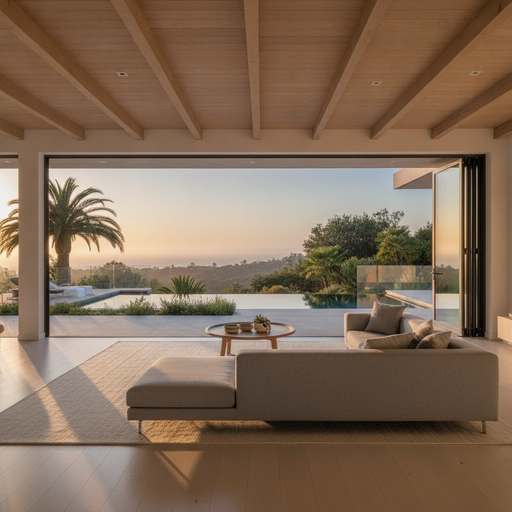
    Imagine waking up to the soft, golden glow of the morning sun as it filters through expansive glass walls. You walk across wide-plank white oak floors, feeling the gentle transition between your living room and the outdoor patio where the scent of jasmine hangs in the air. This isn’t just a vacation fantasy; it is the essence of Modern California design. Whether you live in the heart of Los Angeles or thousands of miles away, the “California Modern” aesthetic offers a lifestyle centered on wellness, light, and a seamless coection to nature.

    Renovating a home with a California-inspired vision isn’t just about changing the paint color or upgrading the appliances. It’s about a fundamental shift in how you experience your environment. It’s about stripping away the clutter of traditional architecture and embracing a “less is more” philosophy that prioritizes quality, organic materials, and an effortless flow. In this guide, we will explore the essential renovation ideas that can turn any house into a modern West Coast sanctuary.

    1. The Art of Indoor-Outdoor Integration

    In California, the backyard isn’t just a yard—it’s an extension of the living room. The most impactful renovation you can undertake to achieve this look is the installation of floor-to-ceiling glass doors. Large-scale sliding systems or “pocket doors” that disappear completely into the walls are the gold standard for this style.

    Creating a “California Room”

    A California Room is a covered outdoor space that functions as a secondary lounge. When renovating, consider extending your roofline to create a shaded patio area. Equip it with built-in heaters for chilly evenings, a sleek outdoor fireplace, and comfortable, weather-resistant sectional sofas. The goal is to make the transition from the indoor rug to the outdoor deck feel almost invisible.

    Matching Floor Levels

    To truly achieve that seamless flow, ensure that your indoor flooring and outdoor decking are at the exact same level. Using similar materials—such as indoor-rated limestone transitioning to outdoor-rated pavers of the same color—tricks the eye into thinking the entire space is one massive room.

    2. The Heart of the Home: A Minimalist, Organic Kitchen

    The modern California kitchen has evolved away from the cold, clinical look of all-white cabinets. Today’s trend focuses on “Organic Modernism.” This means bringing in warmth through natural wood grains and earthy textures while keeping the lines clean and functional.

    • Light Wood Cabinetry: Trade in dark mahogany or stark white for rift-sawn white oak. It provides a beautiful, linear grain that adds warmth without feeling heavy.
    • Waterfall Islands: A large kitchen island with a stone slab that “falls” over the edges to the floor creates a sculptural focal point. Choose marble with subtle veining or durable quartzite for a high-end finish.
    • Integrated Appliances: To keep the kitchen looking like a piece of furniture rather than a utility zone, use panel-ready refrigerators and dishwashers that match your cabinetry.
    • Open Shelving: Instead of bulky upper cabinets, install a few floating wooden shelves to display artisanal ceramics and greenery.

    3. Bathrooms as Personal Sanctuaries

    A California renovation isn’t complete without transforming the primary bathroom into a spa-like retreat. The philosophy here is “Zen Minimalism.” You want a space that feels calm, airy, and grounded iatural elements.

    The Wet Room Concept

    Modern renovations are increasingly moving toward “wet rooms,” where the freestanding bathtub and the shower are housed within the same glass-enclosed area. This not only looks incredibly luxurious but also makes the bathroom feel much larger.

    Natural Stone and Skylights

    Using large-format tiles in sandy tones or slate grays can mimic the rugged beauty of the California coastline. If your bathroom layout allows, add a skylight above the shower. There is nothing quite like showering under natural light to start your day with a sense of peace.

    4. Embracing the Organic Color Palette

    If you look at the landscape of Northern and Southern California, you see a specific set of colors: the muted greens of sagebrush, the warm tans of the desert, the soft grays of the Pacific fog, and the crisp white of coastal homes. This is your palette.

    When choosing paint, avoid stark, blue-toned whites. Instead, opt for “Warm Whites” that have a slight creamy undertone. These shades catch the sunlight beautifully and make the room feel inviting rather than sterile. Accents should be kept in the earthy realm—think terracotta, charcoal, and olive green. These colors ground the brightness of the white walls and provide a sophisticated contrast.

    5. Sustainable and Smart Living

    Modern California design is deeply rooted in environmental consciousness. A renovation is the perfect time to integrate sustainable technology that not only helps the planet but also increases your home’s value.

    Solar and Energy Efficiency

    California is a leader in solar energy, and incorporating sleek, low-profile solar panels is a hallmark of a modern renovation. Pair this with a smart home system that controls your lighting, heating, and cooling. Smart shades that automatically lower during the hottest part of the day can significantly reduce your energy footprint while keeping your home comfortable.

    Native Landscaping

    The renovation shouldn’t stop at the walls. Modern California curb appeal relies on “xeriscaping”—using drought-tolerant plants like agave, lavender, and ornamental grasses. These plants require very little water and provide a sculptural, modern look that complements the architecture of the home.

    6. Lighting: The Invisible Architect

    In a modern home, lighting is used to highlight architectural features and create mood. Ditch the traditional center-room ceiling fans and bulky chandeliers. Instead, focus on layered lighting.

    • Recessed Pin Lights: Small, discreet LED lights that provide bright illumination without cluttering the ceiling.
    • Cove Lighting: Hidden LED strips in ceiling recesses or under cabinets that create a soft, ethereal glow.
    • Statement Pendants: Use one or two oversized, organic-shaped pendants—perhaps made of woven rattan or hand-blown glass—over the dining table or kitchen island to act as a piece of art.

    Conclusion: Living the Dream

    At its core, a modern California home renovation is about creating a space that breathes. It is about removing the barriers between you and the natural world, choosing quality over quantity, and prioritizing a sense of calm in an increasingly busy world. By focusing oatural light, organic materials, and a seamless indoor-outdoor flow, you don’t just change the look of your house—you change the way you live within it.

    Whether you are knocking down walls to create an open floor plan or simply swapping out hardware and paint, remember that the “California look” is a feeling of ease. It is a home that feels sophisticated enough for a dier party but comfortable enough to walk through barefoot after a long day. Start your journey today, and bring a piece of the Golden State sunshine into your life.