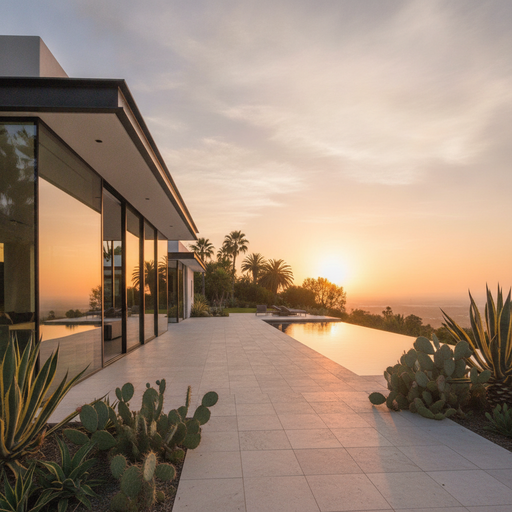
Tag: indoor-outdoor living

  • The Evolution of Golden State Living: A Deep Dive into Contemporary California Housing Styles

    The Evolution of Golden State Living: A Deep Dive into Contemporary California Housing Styles

    The California Dream: More Than Just a Location

    Imagine driving down the Pacific Coast Highway as the sun begins its slow descent toward the horizon, painting the sky in hues of burnt orange and soft lavender. To your right, the ocean roars; to your left, the hillside is dotted with architectural marvels that seem to grow out of the cliffs themselves. This is California, a place where the home has never been just a shelter. In the Golden State, a house is a statement, a sanctuary, and a seamless extension of the landscape.

    For decades, California has been the laboratory of American architecture. From the Spanish missions of the 1700s to the post-war suburban boom, the state has constantly redefined how we live. Today, we are witnessing a new era: Contemporary California Housing. This style isn’t just about “modern” looks; it’s about a lifestyle that prioritizes wellness, sustainability, and a blurring of the lines between the indoors and the outdoors. Let’s take a journey through the styles that are currently shaping the California skyline.

    The New Modern Farmhouse: Rustic Meets Refined

    If you’ve spent any time ieighborhoods like Hidden Hills or the rolling hills of Napa Valley lately, you’ve seen it: the Modern Farmhouse. While this trend took the entire country by storm, California gave it a specific, sophisticated twist. Unlike the traditional country versions, the California Modern Farmhouse is characterized by sharp contrasts and expansive glass.

    Typically featuring crisp white board-and-batten siding paired with black steel window frames, these homes offer a “gentle modernism.” They provide the warmth of a family home with the clean lines of a gallery. Inside, you’ll find reclaimed wood beams stretching across vaulted ceilings, but the floors are often polished concrete or light European oak. It’s a style that feels grounded in history but looks firmly toward the future. It’s the perfect backdrop for a life that involves both organic gardening and high-tech remote work.

    The Mid-Century Modern Revival: Palm Springs Redux

    You can’t talk about California housing without paying homage to the Mid-Century Modern (MCM) movement. In the 1950s and 60s, architects like Joseph Eichler and Richard Neutra pioneered homes that featured flat roofs, open floor plans, and floor-to-ceiling glass. Fast forward to today, and we are seeing a massive “2.0” revival of this style.

    Contemporary MCM homes in California take the original principles—integration with nature and geometric simplicity—and upgrade them with 21st-century technology. We’re seeing more “post-and-beam” construction that allows for entire walls to disappear. In Palm Springs and Silver Lake, these homes are being built with high-performance glazing to handle the heat, and solar arrays hidden behind those iconic flat rooflines. It’s a nostalgic nod to a time when the future felt limitless, updated for a generation that values conservation as much as aesthetics.

    Coastal Contemporary: Light, Air, and Salt

    Along the beaches of Malibu, Laguna, and Santa Barbara, the “Coastal Contemporary” style reigns supreme. This isn’t your grandmother’s beach cottage with anchors and navy stripes. Instead, this style is defined by a palette of neutrals—sands, driftwood greys, and misty whites—that mimic the environment outside the window.

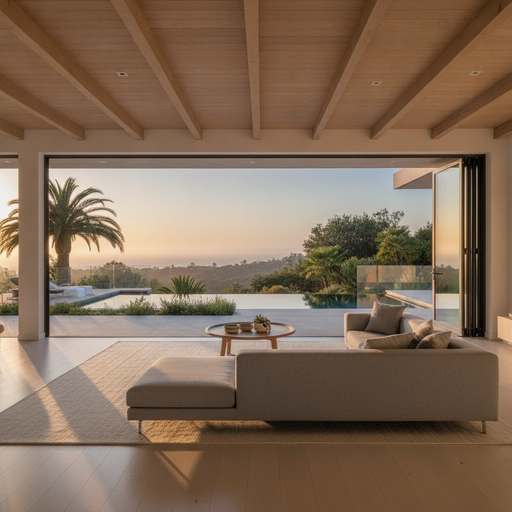
    The key feature here is the “pocket door” system. These are massive glass panels that slide completely into the walls, turning the entire living room into a covered patio. The flooring often transitions seamlessly from the indoor hardwood to the outdoor deck, making the Pacific Ocean feel like it’s part of your furniture arrangement. Materials are chosen for their ability to withstand salt air: copper accents that patina over time, cedar siding, and limestone flooring that stays cool under the summer sun.

    Desert Modernism: Responding to the Elements

    As we move inland to the high deserts of Joshua Tree and the Coachella Valley, the architecture changes to meet a harsher, more dramatic climate. Desert Modernism is all about “thermal mass” and blending into the earth. These homes often feature rammed earth walls, rusted Corten steel, and low profiles that protect against high winds.

    The contemporary version of this style is incredibly sculptural. Architects are using cantilevered roofs to provide deep shade during the day, while strategically placed skylights allow the moon and stars to illuminate the interior at night. The landscaping is never a lush green lawn; instead, it’s a curated collection of agave, yucca, and crushed local stone. It’s a minimalist approach that proves luxury doesn’t have to be loud; sometimes, it’s just about being in harmony with the silence of the desert.

    The Rise of the ADU: Smart Density

    We can’t discuss California housing without mentioning a massive shift in urban plaing: the Accessory Dwelling Unit (ADU). Because of the state’s housing density needs, the “backyard cottage” has become a staple of contemporary design. But these aren’t just tool sheds converted into bedrooms.

    Contemporary ADUs are masterpieces of small-scale architecture. Many are prefabricated in factories using sustainable materials and craned into backyards in Los Angeles or San Francisco. They often mirror the main house’s contemporary style, featuring lofted sleeping areas, built-in “smart” furniture, and large windows to make 500 square feet feel like 1,000. It represents a shift toward multi-generational living and a smarter use of California’s precious land.

    Sustainability as a Standard

    In the modern California home, “green” is no longer an optional upgrade; it is the foundation of the design. California has some of the strictest building codes in the world regarding energy efficiency. This has led to a beautiful synergy between tech and home design.

    • Solar Integration: Almost all new homes now feature solar panels, often integrated so seamlessly into the roofline that they are invisible from the street.
    • Drought-Tolerant Landscaping: The “lush green lawn” is being replaced by “California Friendly” gardens that use drip irrigation and native plants like Manzanita and Sage.
    • Smart Home Eco-systems: Contemporary homes use AI to manage temperature, lighting, and water usage, ensuring that the house “breathes” with its inhabitants.
    • Passive Cooling: Architects are returning to old-world techniques, using cross-ventilation and thermal chimneys to keep houses cool without constant air conditioning.

    The Heart of the Home: The Great Room

    Across all these styles, one internal feature remains constant: the death of the formal dining room. Contemporary California living is informal and social. The “Great Room” combines the kitchen, dining area, and living room into one massive, fluid space. The kitchen island has become the new town square—a place for homework, morning coffee, and evening wine. This layout reflects the California ethos: approachable, open, and focused on human coection rather than rigid formality.

    Conclusion: A Legacy of Iovation

    Contemporary California housing is more than just a collection of trends; it’s a reflection of a culture that refuses to be stagnant. Whether it’s a sleek glass box in the Hollywood Hills or a cozy, sustainable ADU in a suburban backyard, these homes share a common DNA. they are designed to celebrate the light, respect the land, and provide a sanctuary for a fast-paced world.

    As we look to the future, California will likely continue to lead the way, showing us that we can live beautifully while living responsibly. The Golden State remains a place where the home is not just where you hang your hat—it’s where you experience the best version of the world outside your door.
  • Coastal Cool: Transforming Your Space with Modern California Home Renovation Ideas

    Coastal Cool: Transforming Your Space with Modern California Home Renovation Ideas

    The Magic of the Golden State: Redefining Your Living Space

    Imagine waking up to the soft, golden glow of the morning sun as it filters through expansive glass walls. You walk across wide-plank white oak floors, feeling the gentle transition between your living room and the outdoor patio where the scent of jasmine hangs in the air. This isn’t just a vacation fantasy; it is the essence of Modern California design. Whether you live in the heart of Los Angeles or thousands of miles away, the “California Modern” aesthetic offers a lifestyle centered on wellness, light, and a seamless coection to nature.

    Renovating a home with a California-inspired vision isn’t just about changing the paint color or upgrading the appliances. It’s about a fundamental shift in how you experience your environment. It’s about stripping away the clutter of traditional architecture and embracing a “less is more” philosophy that prioritizes quality, organic materials, and an effortless flow. In this guide, we will explore the essential renovation ideas that can turn any house into a modern West Coast sanctuary.

    1. The Art of Indoor-Outdoor Integration

    In California, the backyard isn’t just a yard—it’s an extension of the living room. The most impactful renovation you can undertake to achieve this look is the installation of floor-to-ceiling glass doors. Large-scale sliding systems or “pocket doors” that disappear completely into the walls are the gold standard for this style.

    Creating a “California Room”

    A California Room is a covered outdoor space that functions as a secondary lounge. When renovating, consider extending your roofline to create a shaded patio area. Equip it with built-in heaters for chilly evenings, a sleek outdoor fireplace, and comfortable, weather-resistant sectional sofas. The goal is to make the transition from the indoor rug to the outdoor deck feel almost invisible.

    Matching Floor Levels

    To truly achieve that seamless flow, ensure that your indoor flooring and outdoor decking are at the exact same level. Using similar materials—such as indoor-rated limestone transitioning to outdoor-rated pavers of the same color—tricks the eye into thinking the entire space is one massive room.

    2. The Heart of the Home: A Minimalist, Organic Kitchen

    The modern California kitchen has evolved away from the cold, clinical look of all-white cabinets. Today’s trend focuses on “Organic Modernism.” This means bringing in warmth through natural wood grains and earthy textures while keeping the lines clean and functional.

    • Light Wood Cabinetry: Trade in dark mahogany or stark white for rift-sawn white oak. It provides a beautiful, linear grain that adds warmth without feeling heavy.
    • Waterfall Islands: A large kitchen island with a stone slab that “falls” over the edges to the floor creates a sculptural focal point. Choose marble with subtle veining or durable quartzite for a high-end finish.
    • Integrated Appliances: To keep the kitchen looking like a piece of furniture rather than a utility zone, use panel-ready refrigerators and dishwashers that match your cabinetry.
    • Open Shelving: Instead of bulky upper cabinets, install a few floating wooden shelves to display artisanal ceramics and greenery.

    3. Bathrooms as Personal Sanctuaries

    A California renovation isn’t complete without transforming the primary bathroom into a spa-like retreat. The philosophy here is “Zen Minimalism.” You want a space that feels calm, airy, and grounded iatural elements.

    The Wet Room Concept

    Modern renovations are increasingly moving toward “wet rooms,” where the freestanding bathtub and the shower are housed within the same glass-enclosed area. This not only looks incredibly luxurious but also makes the bathroom feel much larger.

    Natural Stone and Skylights

    Using large-format tiles in sandy tones or slate grays can mimic the rugged beauty of the California coastline. If your bathroom layout allows, add a skylight above the shower. There is nothing quite like showering under natural light to start your day with a sense of peace.

    4. Embracing the Organic Color Palette

    If you look at the landscape of Northern and Southern California, you see a specific set of colors: the muted greens of sagebrush, the warm tans of the desert, the soft grays of the Pacific fog, and the crisp white of coastal homes. This is your palette.

    When choosing paint, avoid stark, blue-toned whites. Instead, opt for “Warm Whites” that have a slight creamy undertone. These shades catch the sunlight beautifully and make the room feel inviting rather than sterile. Accents should be kept in the earthy realm—think terracotta, charcoal, and olive green. These colors ground the brightness of the white walls and provide a sophisticated contrast.

    5. Sustainable and Smart Living

    Modern California design is deeply rooted in environmental consciousness. A renovation is the perfect time to integrate sustainable technology that not only helps the planet but also increases your home’s value.

    Solar and Energy Efficiency

    California is a leader in solar energy, and incorporating sleek, low-profile solar panels is a hallmark of a modern renovation. Pair this with a smart home system that controls your lighting, heating, and cooling. Smart shades that automatically lower during the hottest part of the day can significantly reduce your energy footprint while keeping your home comfortable.

    Native Landscaping

    The renovation shouldn’t stop at the walls. Modern California curb appeal relies on “xeriscaping”—using drought-tolerant plants like agave, lavender, and ornamental grasses. These plants require very little water and provide a sculptural, modern look that complements the architecture of the home.

    6. Lighting: The Invisible Architect

    In a modern home, lighting is used to highlight architectural features and create mood. Ditch the traditional center-room ceiling fans and bulky chandeliers. Instead, focus on layered lighting.

    • Recessed Pin Lights: Small, discreet LED lights that provide bright illumination without cluttering the ceiling.
    • Cove Lighting: Hidden LED strips in ceiling recesses or under cabinets that create a soft, ethereal glow.
    • Statement Pendants: Use one or two oversized, organic-shaped pendants—perhaps made of woven rattan or hand-blown glass—over the dining table or kitchen island to act as a piece of art.

    Conclusion: Living the Dream

    At its core, a modern California home renovation is about creating a space that breathes. It is about removing the barriers between you and the natural world, choosing quality over quantity, and prioritizing a sense of calm in an increasingly busy world. By focusing oatural light, organic materials, and a seamless indoor-outdoor flow, you don’t just change the look of your house—you change the way you live within it.

    Whether you are knocking down walls to create an open floor plan or simply swapping out hardware and paint, remember that the “California look” is a feeling of ease. It is a home that feels sophisticated enough for a dier party but comfortable enough to walk through barefoot after a long day. Start your journey today, and bring a piece of the Golden State sunshine into your life.