Tag: ranch home landscaping

  • Transforming Your Ranch Home: Creative Backyard Landscaping Ideas for Modern Outdoor Living

    Transforming Your Ranch Home: Creative Backyard Landscaping Ideas for Modern Outdoor Living

    The Hidden Potential of the Classic Ranch Backyard

    There is something inherently nostalgic and comforting about a ranch-style home. With its long, low profile and sprawling footprint, the ranch house—or “rambler” as some call it—represents a golden era of American architecture. If you own one of these gems, you already know the best part: the seamless coection between the indoors and the outdoors. Unlike tall, narrow multi-story builds, a ranch home sits close to the earth, practically begging for a backyard that acts as an extension of the living room.

    I remember visiting a friend who had just purchased a 1960s ranch. At first glance, the backyard was a sea of patchy grass and a single, lonely concrete pad. It felt exposed and uninspired. But as we sat on the back steps, we started to see the “bones” of the property. The wide horizon of the house offered a perfect canvas for layering plants, creating distinct rooms, and building a sanctuary that felt private yet expansive. Whether you are working with a mid-century modern masterpiece or a simple suburban rambler, your backyard has the potential to become your favorite “room” in the house. Here is how we can bring that vision to life.

    Embracing the Horizontal Line: Layering Your Landscape

    The defining characteristic of a ranch home is its horizontal emphasis. To make your landscaping look intentional, you want to mimic and complement those long lines rather than fighting against them. Planting a row of tall, skiy trees right against the house can often make the building look shorter and out of proportion. Instead, think about “layering.”

    Start with low-growing ground covers near the foundation, move into mid-sized shrubs, and place your taller elements further back toward the property line. This creates a sense of depth that makes a small yard feel much larger. Ornamental grasses like Peisetum or Blue Fescue are fantastic for ranch homes because their airy texture softens the hard angles of the architecture without blocking the view from those iconic large windows.

    Creating “Outdoor Rooms” for Every Mood

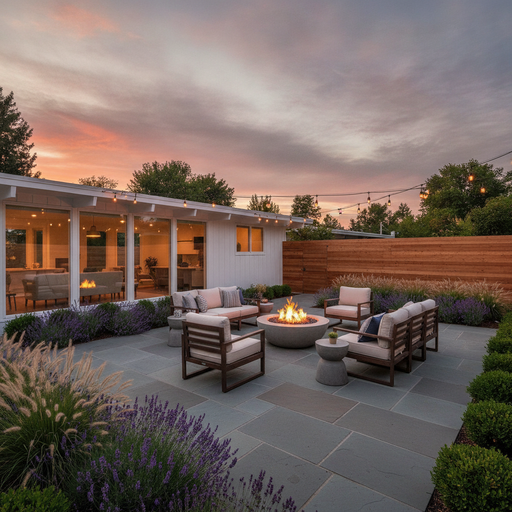
    Because ranch homes often have wide backyards, the space can sometimes feel like a giant, empty field. The secret to a cozy atmosphere is “zoning.” Think of your backyard as a floor plan without walls. You might have a “dining room” featuring a large farmhouse table on a stone patio, a “living room” centered around a fire pit, and perhaps a “quiet nook” tucked away under a pergola for morning coffee.

    • The Dining Zone: Position this closest to the kitchen or the sliding glass doors for easy access. Use oversized pavers with thyme or moss growing between them to create an earthy, lived-in feel.
    • The Fire Pit Hub: Move this further into the yard. A sunken fire pit works beautifully with the low-profile nature of a ranch home, providing a cozy gathering spot that doesn’t obstruct your view of the rest of the landscape.
    • The Recreation Zone: If you have kids or pets, leave a dedicated patch of lush turf in the center, framed by garden beds, to keep the space functional and organized.

    The Power of Hardscaping: Decks, Patios, and Pathways

    The traditional ranch home often came with a small concrete stoop. To truly transform the space, you need to think bigger. A wide, wrap-around wooden deck or a sprawling flagstone patio can bridge the gap between your interior floor level and the ground outside. This “leveling up” is crucial for that indoor-outdoor flow.

    If your ranch sits on a slight slope, consider multi-level terracing. Small stone retaining walls can create flat areas for planting or seating, adding architectural interest to an otherwise flat lot. For materials, stick to natural tones. Warm woods, slate, and pea gravel complement the earthy, grounded aesthetic of most ranch designs. Meandering pathways made of crushed stone or stepping stones can lead the eye—and the feet—through different parts of the garden, making a simple walk to the back fence feel like an exploration.

    Privacy Without the “Closed-In” Feel

    One challenge with ranch homes is that they are often built on large but open lots, leaving you feeling a bit exposed to the neighbors. However, a six-foot wooden privacy fence can sometimes feel like a fortress that clashes with the open vibe of a ranch. Instead, look to “living fences.”

    Strategic plantings of skip laurels, arborvitae, or even tall decorative grasses can provide a soft, green screen that blocks the wind and prying eyes while maintaining a natural look. If you prefer a structural element, consider a horizontal slat fence. The horizontal lines of the wood mimic the siding of the ranch home, creating a modern and cohesive look that feels sophisticated rather than restrictive.

    Plant Selection: Color, Texture, and Ease of Maintenance

    When choosing plants for a ranch backyard, I always recommend a mix of evergreen structure and seasonal color. Since many ranch homes feature large picture windows, you want your garden to look good even in the middle of winter. Evergreens like boxwoods or dwarf conifers provide that year-round “skeleton” for your garden.

    For a pop of personality, consider the following:

    • Hydrangeas: Their large, lush blooms add a touch of classic elegance and fill up space quickly along the foundation.
    • Lavender and Sage: These offer incredible scent and silvery-green foliage that pairs beautifully with the mid-century aesthetic.
    • Japanese Maples: A well-placed Japanese Maple can serve as a stuing focal point, offering delicate leaves and vibrant fall colors without growing so tall that it overshadows the house.
    • Native Wildflowers: If you want a lower-maintenance “meadow” look, dedicated patches of native blooms will attract pollinators and provide a changing tapestry of color throughout the year.

    Lighting: The Finishing Touch

    Don’t let your beautiful new landscape disappear when the sun goes down. Lighting is the “jewelry” of the backyard. Because ranch homes are long, you can use exterior lighting to highlight the texture of your home’s siding or stone accents. Path lights along your walkways ensure safety, while uplighting a few key trees creates a dramatic, high-end look. String lights (bistro lights) crisscrossing over a patio instantly add a festive, welcoming glow that invites you to stay outside just a little bit longer.

    Conclusion: Your Personal Oasis Awaits

    Landscaping a ranch home is all about balance. It is about respecting the original architecture while breathing new life into the earth around it. By focusing on horizontal lines, creating functional zones, and choosing a palette of plants that offer texture and color, you can transform a simple backyard into a sophisticated retreat.

    Remember, you don’t have to do it all at once. Start with a solid patio and a few foundation plants, then add a new “zone” or a winding path each season. Before you know it, you won’t just have a backyard; you’ll have a sanctuary that perfectly reflects the relaxed, grounded spirit of ranch living. So, grab a shovel, a cold drink, and start dreaming—your perfect ranch retreat is just a few plants away.
  • Transforming Your Ranch Home: Creative Backyard Landscaping Ideas for Modern Outdoor Living

    Transforming Your Ranch Home: Creative Backyard Landscaping Ideas for Modern Outdoor Living

    The Hidden Potential of the Classic Ranch Backyard

    There is something inherently nostalgic and comforting about a ranch-style home. With its long, low profile and sprawling footprint, the ranch house—or “rambler” as some call it—represents a golden era of American architecture. If you own one of these gems, you already know the best part: the seamless coection between the indoors and the outdoors. Unlike tall, narrow multi-story builds, a ranch home sits close to the earth, practically begging for a backyard that acts as an extension of the living room.

    I remember visiting a friend who had just purchased a 1960s ranch. At first glance, the backyard was a sea of patchy grass and a single, lonely concrete pad. It felt exposed and uninspired. But as we sat on the back steps, we started to see the “bones” of the property. The wide horizon of the house offered a perfect canvas for layering plants, creating distinct rooms, and building a sanctuary that felt private yet expansive. Whether you are working with a mid-century modern masterpiece or a simple suburban rambler, your backyard has the potential to become your favorite “room” in the house. Here is how we can bring that vision to life.

    Embracing the Horizontal Line: Layering Your Landscape

    The defining characteristic of a ranch home is its horizontal emphasis. To make your landscaping look intentional, you want to mimic and complement those long lines rather than fighting against them. Planting a row of tall, skiy trees right against the house can often make the building look shorter and out of proportion. Instead, think about “layering.”

    Start with low-growing ground covers near the foundation, move into mid-sized shrubs, and place your taller elements further back toward the property line. This creates a sense of depth that makes a small yard feel much larger. Ornamental grasses like Peisetum or Blue Fescue are fantastic for ranch homes because their airy texture softens the hard angles of the architecture without blocking the view from those iconic large windows.

    Creating “Outdoor Rooms” for Every Mood

    Because ranch homes often have wide backyards, the space can sometimes feel like a giant, empty field. The secret to a cozy atmosphere is “zoning.” Think of your backyard as a floor plan without walls. You might have a “dining room” featuring a large farmhouse table on a stone patio, a “living room” centered around a fire pit, and perhaps a “quiet nook” tucked away under a pergola for morning coffee.

    • The Dining Zone: Position this closest to the kitchen or the sliding glass doors for easy access. Use oversized pavers with thyme or moss growing between them to create an earthy, lived-in feel.
    • The Fire Pit Hub: Move this further into the yard. A sunken fire pit works beautifully with the low-profile nature of a ranch home, providing a cozy gathering spot that doesn’t obstruct your view of the rest of the landscape.
    • The Recreation Zone: If you have kids or pets, leave a dedicated patch of lush turf in the center, framed by garden beds, to keep the space functional and organized.

    The Power of Hardscaping: Decks, Patios, and Pathways

    The traditional ranch home often came with a small concrete stoop. To truly transform the space, you need to think bigger. A wide, wrap-around wooden deck or a sprawling flagstone patio can bridge the gap between your interior floor level and the ground outside. This “leveling up” is crucial for that indoor-outdoor flow.

    If your ranch sits on a slight slope, consider multi-level terracing. Small stone retaining walls can create flat areas for planting or seating, adding architectural interest to an otherwise flat lot. For materials, stick to natural tones. Warm woods, slate, and pea gravel complement the earthy, grounded aesthetic of most ranch designs. Meandering pathways made of crushed stone or stepping stones can lead the eye—and the feet—through different parts of the garden, making a simple walk to the back fence feel like an exploration.

    Privacy Without the “Closed-In” Feel

    One challenge with ranch homes is that they are often built on large but open lots, leaving you feeling a bit exposed to the neighbors. However, a six-foot wooden privacy fence can sometimes feel like a fortress that clashes with the open vibe of a ranch. Instead, look to “living fences.”

    Strategic plantings of skip laurels, arborvitae, or even tall decorative grasses can provide a soft, green screen that blocks the wind and prying eyes while maintaining a natural look. If you prefer a structural element, consider a horizontal slat fence. The horizontal lines of the wood mimic the siding of the ranch home, creating a modern and cohesive look that feels sophisticated rather than restrictive.

    Plant Selection: Color, Texture, and Ease of Maintenance

    When choosing plants for a ranch backyard, I always recommend a mix of evergreen structure and seasonal color. Since many ranch homes feature large picture windows, you want your garden to look good even in the middle of winter. Evergreens like boxwoods or dwarf conifers provide that year-round “skeleton” for your garden.

    For a pop of personality, consider the following:

    • Hydrangeas: Their large, lush blooms add a touch of classic elegance and fill up space quickly along the foundation.
    • Lavender and Sage: These offer incredible scent and silvery-green foliage that pairs beautifully with the mid-century aesthetic.
    • Japanese Maples: A well-placed Japanese Maple can serve as a stuing focal point, offering delicate leaves and vibrant fall colors without growing so tall that it overshadows the house.
    • Native Wildflowers: If you want a lower-maintenance “meadow” look, dedicated patches of native blooms will attract pollinators and provide a changing tapestry of color throughout the year.

    Lighting: The Finishing Touch

    Don’t let your beautiful new landscape disappear when the sun goes down. Lighting is the “jewelry” of the backyard. Because ranch homes are long, you can use exterior lighting to highlight the texture of your home’s siding or stone accents. Path lights along your walkways ensure safety, while uplighting a few key trees creates a dramatic, high-end look. String lights (bistro lights) crisscrossing over a patio instantly add a festive, welcoming glow that invites you to stay outside just a little bit longer.

    Conclusion: Your Personal Oasis Awaits

    Landscaping a ranch home is all about balance. It is about respecting the original architecture while breathing new life into the earth around it. By focusing on horizontal lines, creating functional zones, and choosing a palette of plants that offer texture and color, you can transform a simple backyard into a sophisticated retreat.

    Remember, you don’t have to do it all at once. Start with a solid patio and a few foundation plants, then add a new “zone” or a winding path each season. Before you know it, you won’t just have a backyard; you’ll have a sanctuary that perfectly reflects the relaxed, grounded spirit of ranch living. So, grab a shovel, a cold drink, and start dreaming—your perfect ranch retreat is just a few plants away.

  • From Flat to Fabulous: Stunning Ranch Home Entrance Landscaping Ideas to Boost Your Curb Appeal

    From Flat to Fabulous: Stunning Ranch Home Entrance Landscaping Ideas to Boost Your Curb Appeal

    The Hidden Potential of the Classic Ranch Home

    Imagine pulling into your driveway after a long day at work. You catch a glimpse of your home, and instead of seeing a flat, uninspired facade, you are greeted by a lush, multi-dimensional landscape that guides your eye right to a welcoming front door. This is the power of thoughtful ranch home entrance landscaping. For decades, the ranch-style house—also known as the rambler—has been a staple of American architecture. Known for its long, low profile and open-concept living, the ranch home offers a unique canvas for homeowners. However, because of their horizontal nature, these houses can sometimes look a bit “sunken” or monotonous if the landscaping isn’t handled correctly.

    The secret to a stuing ranch entrance isn’t just about planting a few flowers; it is about creating a story that starts at the sidewalk and ends at your welcome mat. Because ranch homes sit low to the ground, you have the opportunity to play with layers, textures, and heights in a way that two-story homes simply caot. In this guide, we will walk through the essential elements of transforming your ranch home’s entrance into a neighborhood showstopper, focusing on design principles that enhance its natural charm while adding that much-needed “wow” factor.

    Working with the Horizontal Line

    The most defining characteristic of a ranch home is its horizontal line. To make your entrance stand out, you need to work with this line, not against it. Many homeowners make the mistake of planting a single row of identical shrubs along the foundation. While this is easy, it often emphasizes the “flatness” of the house, making it look shorter than it actually is. Instead, professional designers suggest breaking up those long lines with varying heights.

    Think of your landscaping as a staircase for the eyes. You want to start with low-growing groundcovers near the walkway, transition to mid-sized pereials, and finish with taller shrubs or ornamental trees near the corners of the house. This creates a sense of depth. By pulling the garden beds out away from the house—making them deeper than the standard two or three feet—you create a lush “skirt” that grounds the house and makes the entrance feel more substantial and grand.

    Creating a Focal Point: The Path to Your Door

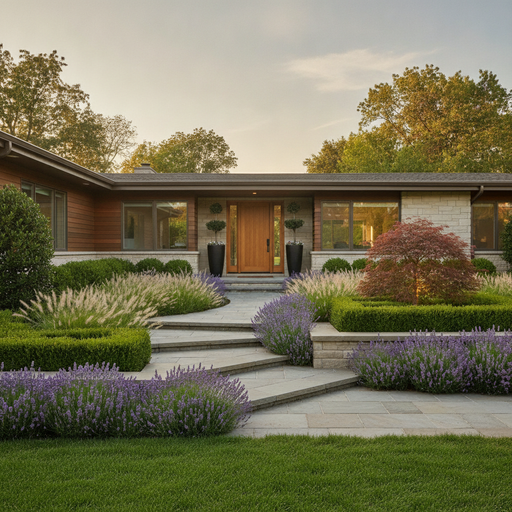
    In a long ranch home, the front door can sometimes get lost in the sea of windows and siding. Your landscaping’s primary job is to tell your guests exactly where to go. A wide, inviting walkway is the first step. If your current path is a narrow, straight concrete strip, consider replacing it with something more character-filled like flagstone, pavers, or even stamped concrete. A curved path adds a sense of mystery and elegance, slowing down the journey to the front door and allowing guests to appreciate your garden along the way.

    To further highlight the entrance, consider “framing” the door. You can do this with architectural elements like a portico or a small porch extension, but plants can do the job just as well. Placing two identical tall planters on either side of the door or planting a pair of upright evergreens (like Sky Pencil Hollies) can act as visual exclamation points. These vertical elements provide a necessary contrast to the home’s horizontal orientation, drawing the eye upward and making the entrance feel more prominent.

    Layering for Texture and Color

    When choosing plants for a ranch home entrance, variety is your best friend. Since the house is low, you can see the entire landscape at once, so texture becomes very important. Mixing fine-textured plants, like ornamental grasses or ferns, with bold-leafed plants, like Hostas or Hydrangeas, creates visual interest even wheothing is in bloom.

    • Structural Evergreen: Use Boxwoods or Yews to provide a green framework that looks good even in the dead of winter.
    • Soft Grasses: Peisetum or Blue Fescue adds movement and a modern touch that complements the mid-century roots of many ranch homes.
    • Seasonal Color: Don’t forget the pereials. Lavender, Salvia, and Coneflowers add pops of color that change with the seasons, ensuring your entrance never looks static.

    Color choice is also vital. If your ranch house is a neutral color like gray, beige, or white, you can go bold with deep purples and bright yellows. If your home is red brick, stick to a palette of blues, silvers, and whites to create a sophisticated, high-contrast look that feels intentional and curated.

    The Importance of Hardscaping and Lighting

    Landscaping isn’t just about things that grow; it’s about the “hard” elements that provide structure. For a ranch home, a small retaining wall or a raised planter bed can do wonders. It lifts the plants closer to eye level and breaks up the flat plane of the yard. Natural stone walls or modern smooth-concrete planters can match the specific era of your ranch, whether it’s a 1950s classic or a 2020s modern build.

    Then, there is the magic of lighting. A well-landscaped entrance should look just as beautiful at 9:00 PM as it does at 9:00 AM. Path lights are essential for safety, but “up-lighting” is where the real drama happens. Positioning small spotlights at the base of an ornamental tree or against a textured stone wall creates shadows and highlights that give your home a high-end, resort-like feel. Soft, warm light focused on the front door acts as a beacon, making the home feel safe and welcoming to everyone who arrives after dark.

    Low-Maintenance Solutions for the Busy Homeowner

    We all want a beautiful yard, but very few of us want to spend every Saturday pulling weeds. The key to a low-maintenance ranch entrance is “right plant, right place.” Research plants that are native to your area; they will require less water and are more resistant to local pests. Mulching is another pro-tip. A thick layer of organic mulch (like shredded bark) prevents weeds, retains moisture, and gives the garden beds a finished, professional look.

    If you have a particularly large front yard, consider a “no-mow” zone. Instead of a massive expanse of grass that needs weekly trimming, create a large island bed filled with drought-tolerant shrubs and groundcovers. This reduces your chores while significantly increasing your home’s aesthetic value. A well-designed ranch landscape should work for you, providing beauty without demanding constant labor.

    Conclusion: Your Home’s New First Impression

    Transforming the entrance of your ranch home is one of the most rewarding home improvement projects you can undertake. By embracing the horizontal architecture, creating a clear and beautiful path to your door, and layering plants for year-round interest, you turn a simple house into a stuing home. Remember, your landscaping is the first thing people see—it is the “handshake” of your home. Whether you are looking to increase your property value or simply want to feel a sense of pride every time you drive up to your house, these entrance landscaping ideas will help you achieve a look that is both timeless and uniquely yours. Take it one step at a time, start with a plan, and watch as your ranch home blossoms into its full potential.

  • From Flat to Fabulous: Stunning Ranch Home Entrance Landscaping Ideas to Boost Your Curb Appeal

    From Flat to Fabulous: Stunning Ranch Home Entrance Landscaping Ideas to Boost Your Curb Appeal

    The Hidden Potential of the Classic Ranch Home

    Imagine pulling into your driveway after a long day at work. You catch a glimpse of your home, and instead of seeing a flat, uninspired facade, you are greeted by a lush, multi-dimensional landscape that guides your eye right to a welcoming front door. This is the power of thoughtful ranch home entrance landscaping. For decades, the ranch-style house—also known as the rambler—has been a staple of American architecture. Known for its long, low profile and open-concept living, the ranch home offers a unique canvas for homeowners. However, because of their horizontal nature, these houses can sometimes look a bit “sunken” or monotonous if the landscaping isn’t handled correctly.

    The secret to a stuing ranch entrance isn’t just about planting a few flowers; it is about creating a story that starts at the sidewalk and ends at your welcome mat. Because ranch homes sit low to the ground, you have the opportunity to play with layers, textures, and heights in a way that two-story homes simply caot. In this guide, we will walk through the essential elements of transforming your ranch home’s entrance into a neighborhood showstopper, focusing on design principles that enhance its natural charm while adding that much-needed “wow” factor.

    Working with the Horizontal Line

    The most defining characteristic of a ranch home is its horizontal line. To make your entrance stand out, you need to work with this line, not against it. Many homeowners make the mistake of planting a single row of identical shrubs along the foundation. While this is easy, it often emphasizes the “flatness” of the house, making it look shorter than it actually is. Instead, professional designers suggest breaking up those long lines with varying heights.

    Think of your landscaping as a staircase for the eyes. You want to start with low-growing groundcovers near the walkway, transition to mid-sized pereials, and finish with taller shrubs or ornamental trees near the corners of the house. This creates a sense of depth. By pulling the garden beds out away from the house—making them deeper than the standard two or three feet—you create a lush “skirt” that grounds the house and makes the entrance feel more substantial and grand.

    Creating a Focal Point: The Path to Your Door

    In a long ranch home, the front door can sometimes get lost in the sea of windows and siding. Your landscaping’s primary job is to tell your guests exactly where to go. A wide, inviting walkway is the first step. If your current path is a narrow, straight concrete strip, consider replacing it with something more character-filled like flagstone, pavers, or even stamped concrete. A curved path adds a sense of mystery and elegance, slowing down the journey to the front door and allowing guests to appreciate your garden along the way.

    To further highlight the entrance, consider “framing” the door. You can do this with architectural elements like a portico or a small porch extension, but plants can do the job just as well. Placing two identical tall planters on either side of the door or planting a pair of upright evergreens (like Sky Pencil Hollies) can act as visual exclamation points. These vertical elements provide a necessary contrast to the home’s horizontal orientation, drawing the eye upward and making the entrance feel more prominent.

    Layering for Texture and Color

    When choosing plants for a ranch home entrance, variety is your best friend. Since the house is low, you can see the entire landscape at once, so texture becomes very important. Mixing fine-textured plants, like ornamental grasses or ferns, with bold-leafed plants, like Hostas or Hydrangeas, creates visual interest even wheothing is in bloom.

    • Structural Evergreen: Use Boxwoods or Yews to provide a green framework that looks good even in the dead of winter.
    • Soft Grasses: Peisetum or Blue Fescue adds movement and a modern touch that complements the mid-century roots of many ranch homes.
    • Seasonal Color: Don’t forget the pereials. Lavender, Salvia, and Coneflowers add pops of color that change with the seasons, ensuring your entrance never looks static.

    Color choice is also vital. If your ranch house is a neutral color like gray, beige, or white, you can go bold with deep purples and bright yellows. If your home is red brick, stick to a palette of blues, silvers, and whites to create a sophisticated, high-contrast look that feels intentional and curated.

    The Importance of Hardscaping and Lighting

    Landscaping isn’t just about things that grow; it’s about the “hard” elements that provide structure. For a ranch home, a small retaining wall or a raised planter bed can do wonders. It lifts the plants closer to eye level and breaks up the flat plane of the yard. Natural stone walls or modern smooth-concrete planters can match the specific era of your ranch, whether it’s a 1950s classic or a 2020s modern build.

    Then, there is the magic of lighting. A well-landscaped entrance should look just as beautiful at 9:00 PM as it does at 9:00 AM. Path lights are essential for safety, but “up-lighting” is where the real drama happens. Positioning small spotlights at the base of an ornamental tree or against a textured stone wall creates shadows and highlights that give your home a high-end, resort-like feel. Soft, warm light focused on the front door acts as a beacon, making the home feel safe and welcoming to everyone who arrives after dark.

    Low-Maintenance Solutions for the Busy Homeowner

    We all want a beautiful yard, but very few of us want to spend every Saturday pulling weeds. The key to a low-maintenance ranch entrance is “right plant, right place.” Research plants that are native to your area; they will require less water and are more resistant to local pests. Mulching is another pro-tip. A thick layer of organic mulch (like shredded bark) prevents weeds, retains moisture, and gives the garden beds a finished, professional look.

    If you have a particularly large front yard, consider a “no-mow” zone. Instead of a massive expanse of grass that needs weekly trimming, create a large island bed filled with drought-tolerant shrubs and groundcovers. This reduces your chores while significantly increasing your home’s aesthetic value. A well-designed ranch landscape should work for you, providing beauty without demanding constant labor.

    Conclusion: Your Home’s New First Impression

    Transforming the entrance of your ranch home is one of the most rewarding home improvement projects you can undertake. By embracing the horizontal architecture, creating a clear and beautiful path to your door, and layering plants for year-round interest, you turn a simple house into a stuing home. Remember, your landscaping is the first thing people see—it is the “handshake” of your home. Whether you are looking to increase your property value or simply want to feel a sense of pride every time you drive up to your house, these entrance landscaping ideas will help you achieve a look that is both timeless and uniquely yours. Take it one step at a time, start with a plan, and watch as your ranch home blossoms into its full potential.