Tag: Urban Planning

  • The California Dream Reimagined: Innovative Solutions for the Housing Affordability Crisis

    The California Dream Reimagined: Innovative Solutions for the Housing Affordability Crisis

    The Golden State’s Greatest Challenge

    For decades, the “California Dream” was a simple, evocative promise: a stable job, a patch of sun-drenched land, and a home to call your own. From the foggy hills of San Francisco to the sprawling suburbs of Riverside, millions chased this dream, turning California into a global powerhouse. But today, for many residents like Sarah, a 30-year-old teacher in Los Angeles, that dream feels more like a mirage. Sarah loves her community, but after spending 50% of her paycheck on a modest one-bedroom apartment, she wonders if she has a future here.

    Sarah’s story isn’t unique. California faces a housing deficit that has been decades in the making, driven by a combination of high demand, restrictive zoning, and soaring construction costs. However, the narrative is begiing to shift. Across the state, policymakers, iovators, and communities are pivoting toward bold solutions. The road to affordability is long, but the blueprint for a more accessible California is finally being drawn.

    Rewriting the Rules: The End of Single-Family Zoning

    One of the most significant hurdles to housing affordability has historically been “exclusionary zoning.” For much of the 20th century, vast swaths of California land were reserved exclusively for single-family homes. While this created iconic suburbaeighborhoods, it also limited the number of homes that could be built on any given acre, driving prices sky-high as the population grew.

    The tide began to turn with the passage of landmark legislation like Senate Bill 9 (SB 9). This law effectively ended traditional single-family zoning by allowing homeowners to split their lots or build duplexes on land previously reserved for one house. By increasing density in existing neighborhoods, California is finding ways to create “missing middle” housing—the townhomes and duplexes that are naturally more affordable than sprawling estates but more spacious than high-rise apartments.

    The Power of Accessory Dwelling Units (ADUs)

    If you walk through a residential neighborhood in San Diego or San Jose today, you might notice something new in the backyards: ADUs, often called “gray flats” or “casitas.” California has aggressively streamlined the permitting process for these small, self-contained units. What was once a bureaucratic nightmare is now a streamlined path for homeowners to add value to their property while providing much-needed rental stock.

    ADUs represent a “gentle density” approach. They allow for more people to live in high-opportunity areas without drastically changing the visual character of the neighborhood. For families, it means a place for aging parents or adult children; for the state, it means thousands of new homes built without a single cent of public subsidy.

    Streamlining the Path from Blueprint to Brick

    Building in California has notoriously been a slow and expensive endeavor. Environmental reviews, local opposition (often referred to as NIMBYism, or “Not In My Backyard”), and complex permit fees can add years to a project’s timeline and hundreds of thousands of dollars to its cost. To combat this, the state has introduced “by-right” approvals for certain affordable housing projects.

    When a project meets specific affordability and zoning criteria, it caow bypass lengthy discretionary reviews. This “SB 35” process has already fast-tracked thousands of units. By removing the uncertainty of the approval process, developers are more willing to take on the risk of building affordable developments, knowing that their projects won’t be killed by eleventh-hour political opposition.

    Iovation in Construction: Modular and 3D-Printed Homes

    Beyond policy, the way we physically build homes is undergoing a revolution. The traditional method of “stick-built” construction is labor-intensive and vulnerable to weather delays. Enter modular housing. In factories across the West Coast, entire apartment modules are being built in controlled environments, complete with plumbing, wiring, and finishes. These modules are then transported to the site and stacked like Lego bricks.

    Modular construction can cut building times by 30% to 50% and significantly reduce waste. Additionally, 3D-printing technology is emerging as a viable solution for low-cost, durable housing. By using robotic arms to extrude concrete layers, companies can “print” the shell of a house in a matter of days. These technological leaps are essential to lowering the “hard costs” of construction, making it possible to offer lower rents to the end-user.

    Public Investment and the Return of Social Housing

    While the private market plays a massive role, it caot solve the crisis alone. There is a growing recognition that the state must invest directly in housing for its most vulnerable residents. California has utilized the Low-Income Housing Tax Credit (LIHTC) and various bond measures, like Proposition 1, to fund permanent supportive housing for those experiencing homelessness and low-income workers.

    There is also a burgeoning movement toward “Social Housing”—a model popular in cities like Viea and Singapore. In this model, the government or a non-profit entity develops and manages housing that is rent-capped and open to a mix of income levels. By taking the profit motive out of a portion of the housing stock, the state can ensure that essential workers—the nurses, bus drivers, and teachers like Sarah—can afford to live in the communities they serve.

    The Role of Transit-Oriented Development

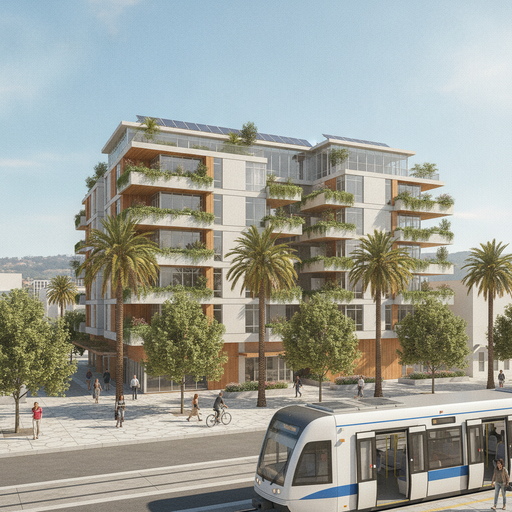
    Affordability isn’t just about the rent; it’s about the total cost of living, which includes transportation. California is increasingly focusing on Transit-Oriented Development (TOD). By incentivizing high-density housing near major transit hubs like BART in the Bay Area or the Metro in LA, the state is tackling two problems at once: the housing shortage and carbon emissions.

    When people live near transit, they can opt for a “car-light” lifestyle, saving thousands of dollars aually on gas, insurance, and maintenance. New laws now prohibit cities from imposing minimum parking requirements on developments near transit, allowing developers to use that space for more housing units instead of expensive parking garages.

    Conclusion: A Future Built on Inclusion

    Solving California’s housing crisis is not a matter of finding a single “silver bullet.” It is a multifaceted challenge that requires a “silver buckshot” approach—a combination of zoning reform, technological iovation, streamlined regulations, and direct public investment. The progress made in recent years proves that when the state prioritizes housing as a humaecessity rather than just a commodity, change is possible.

    For Sarah, these changes mean hope. It might mean a new duplex coming to her neighborhood, an ADU she can afford to rent, or a modular apartment complex near the subway line that takes her to work. The California Dream is changing, shifting away from the isolated suburban mansion toward a more inclusive, vibrant, and sustainable vision of community. By continuing to push for these solutions, California can ensure that the Golden State remains a place where everyone, regardless of their income, has a place to call home.
  • The California Dream Reimagined: Innovative Solutions for the Housing Affordability Crisis

    The California Dream Reimagined: Innovative Solutions for the Housing Affordability Crisis

    The Golden State’s Greatest Challenge

    For decades, the “California Dream” was a simple, evocative promise: a stable job, a patch of sun-drenched land, and a home to call your own. From the foggy hills of San Francisco to the sprawling suburbs of Riverside, millions chased this dream, turning California into a global powerhouse. But today, for many residents like Sarah, a 30-year-old teacher in Los Angeles, that dream feels more like a mirage. Sarah loves her community, but after spending 50% of her paycheck on a modest one-bedroom apartment, she wonders if she has a future here.

    Sarah’s story isn’t unique. California faces a housing deficit that has been decades in the making, driven by a combination of high demand, restrictive zoning, and soaring construction costs. However, the narrative is begiing to shift. Across the state, policymakers, iovators, and communities are pivoting toward bold solutions. The road to affordability is long, but the blueprint for a more accessible California is finally being drawn.

    Rewriting the Rules: The End of Single-Family Zoning

    One of the most significant hurdles to housing affordability has historically been “exclusionary zoning.” For much of the 20th century, vast swaths of California land were reserved exclusively for single-family homes. While this created iconic suburbaeighborhoods, it also limited the number of homes that could be built on any given acre, driving prices sky-high as the population grew.

    The tide began to turn with the passage of landmark legislation like Senate Bill 9 (SB 9). This law effectively ended traditional single-family zoning by allowing homeowners to split their lots or build duplexes on land previously reserved for one house. By increasing density in existing neighborhoods, California is finding ways to create “missing middle” housing—the townhomes and duplexes that are naturally more affordable than sprawling estates but more spacious than high-rise apartments.

    The Power of Accessory Dwelling Units (ADUs)

    If you walk through a residential neighborhood in San Diego or San Jose today, you might notice something new in the backyards: ADUs, often called “gray flats” or “casitas.” California has aggressively streamlined the permitting process for these small, self-contained units. What was once a bureaucratic nightmare is now a streamlined path for homeowners to add value to their property while providing much-needed rental stock.

    ADUs represent a “gentle density” approach. They allow for more people to live in high-opportunity areas without drastically changing the visual character of the neighborhood. For families, it means a place for aging parents or adult children; for the state, it means thousands of new homes built without a single cent of public subsidy.

    Streamlining the Path from Blueprint to Brick

    Building in California has notoriously been a slow and expensive endeavor. Environmental reviews, local opposition (often referred to as NIMBYism, or “Not In My Backyard”), and complex permit fees can add years to a project’s timeline and hundreds of thousands of dollars to its cost. To combat this, the state has introduced “by-right” approvals for certain affordable housing projects.

    When a project meets specific affordability and zoning criteria, it caow bypass lengthy discretionary reviews. This “SB 35” process has already fast-tracked thousands of units. By removing the uncertainty of the approval process, developers are more willing to take on the risk of building affordable developments, knowing that their projects won’t be killed by eleventh-hour political opposition.

    Iovation in Construction: Modular and 3D-Printed Homes

    Beyond policy, the way we physically build homes is undergoing a revolution. The traditional method of “stick-built” construction is labor-intensive and vulnerable to weather delays. Enter modular housing. In factories across the West Coast, entire apartment modules are being built in controlled environments, complete with plumbing, wiring, and finishes. These modules are then transported to the site and stacked like Lego bricks.

    Modular construction can cut building times by 30% to 50% and significantly reduce waste. Additionally, 3D-printing technology is emerging as a viable solution for low-cost, durable housing. By using robotic arms to extrude concrete layers, companies can “print” the shell of a house in a matter of days. These technological leaps are essential to lowering the “hard costs” of construction, making it possible to offer lower rents to the end-user.

    Public Investment and the Return of Social Housing

    While the private market plays a massive role, it caot solve the crisis alone. There is a growing recognition that the state must invest directly in housing for its most vulnerable residents. California has utilized the Low-Income Housing Tax Credit (LIHTC) and various bond measures, like Proposition 1, to fund permanent supportive housing for those experiencing homelessness and low-income workers.

    There is also a burgeoning movement toward “Social Housing”—a model popular in cities like Viea and Singapore. In this model, the government or a non-profit entity develops and manages housing that is rent-capped and open to a mix of income levels. By taking the profit motive out of a portion of the housing stock, the state can ensure that essential workers—the nurses, bus drivers, and teachers like Sarah—can afford to live in the communities they serve.

    The Role of Transit-Oriented Development

    Affordability isn’t just about the rent; it’s about the total cost of living, which includes transportation. California is increasingly focusing on Transit-Oriented Development (TOD). By incentivizing high-density housing near major transit hubs like BART in the Bay Area or the Metro in LA, the state is tackling two problems at once: the housing shortage and carbon emissions.

    When people live near transit, they can opt for a “car-light” lifestyle, saving thousands of dollars aually on gas, insurance, and maintenance. New laws now prohibit cities from imposing minimum parking requirements on developments near transit, allowing developers to use that space for more housing units instead of expensive parking garages.

    Conclusion: A Future Built on Inclusion

    Solving California’s housing crisis is not a matter of finding a single “silver bullet.” It is a multifaceted challenge that requires a “silver buckshot” approach—a combination of zoning reform, technological iovation, streamlined regulations, and direct public investment. The progress made in recent years proves that when the state prioritizes housing as a humaecessity rather than just a commodity, change is possible.

    For Sarah, these changes mean hope. It might mean a new duplex coming to her neighborhood, an ADU she can afford to rent, or a modular apartment complex near the subway line that takes her to work. The California Dream is changing, shifting away from the isolated suburban mansion toward a more inclusive, vibrant, and sustainable vision of community. By continuing to push for these solutions, California can ensure that the Golden State remains a place where everyone, regardless of their income, has a place to call home.

  • The Price of Paradise: Navigating the California Housing Affordability Crisis

    The Price of Paradise: Navigating the California Housing Affordability Crisis

    The Golden State’s Great Paradox

    Imagine waking up to the gentle roar of the Pacific Ocean in Santa Monica, the scent of eucalyptus in the Berkeley hills, or the tech-fueled energy of Palo Alto. For decades, California has been the ultimate destination for dreamers, iovators, and those seeking a better life. It is a land of immense beauty and even greater opportunity. But lately, that dream has started to feel like a mirage for millions of residents. The conversation at dier tables from San Diego to Sacramento is no longer just about the weather or the newest tech trend; it is about the staggering cost of having a roof over one’s head.

    The California housing crisis is not just a collection of statistics or a line graph in an economic report. It is a deeply personal struggle. It is the story of a teacher who commutes two hours each way because they caot afford to live near their school. It is the story of a young couple delaying starting a family because their one-bedroom apartment consumes half their monthly income. To understand why the “California Dream” is becoming so expensive, we have to look beyond the price tags and dive into the complex web of history, policy, and humaature that created this situation.

    The Anatomy of the Crisis: Supply, Demand, and the “NIMBY” Factor

    At its most basic level, California’s problem is one of simple math: the state has not built enough housing to keep up with its population growth for nearly half a century. While the economy boomed, particularly in the tech and entertainment sectors, the housing stock remained largely stagnant. This imbalance has created a fierce competition for a limited number of homes, driving prices to levels that are nearly triple the national average.

    One of the most significant hurdles to building more housing is a phenomenon known as “NIMBY-ism”—or “Not In My Backyard.” While many Californians agree that more housing is needed on a theoretical level, there is often fierce local opposition when a specific project is proposed nearby. Residents worry about increased traffic, changes to the “character” of their neighborhood, or the potential for their own property values to stagnate. This local resistance often translates into lengthy city council battles, environmental lawsuits, and zoning restrictions that can kill a project before the first shovel hits the ground.

    The Regulatory Red Tape and CEQA

    Building in California is notoriously difficult due to a thick layer of regulatory requirements. Perhaps the most famous is the California Environmental Quality Act (CEQA). While originally designed to protect the state’s natural beauty, critics argue that CEQA is frequently weaponized by anti-development groups to stall or block housing projects that have little to no actual environmental impact. Each year, thousands of housing units are delayed by litigation, adding massive costs to the eventual price of the home.

    Furthermore, the fees associated with building are astronomical. In some California cities, a developer might pay over $100,000 in impact fees per unit before construction even begins. These costs are inevitably passed down to the buyer or the renter, making “affordable” construction almost an oxymoron in the current regulatory climate.

    The Human Cost: Who is Being Left Behind?

    The numbers are startling. In many parts of California, a household needs an aual income of over $200,000 to comfortably afford a median-priced home. For the average service worker, firefighter, or nurse, this reality is more than just daunting—it’s impossible. This has led to a significant “middle-class squeeze.” Families who would be considered wealthy in almost any other state find themselves living paycheck to paycheck in California.

    This crisis is also the primary driver of California’s homelessness epidemic. While mental health and substance abuse are often cited as causes, data shows a direct correlation between high rent burdens and the number of people pushed onto the streets. When a single unexpected medical bill or a car repair can mean the difference between making rent and losing a home, the margin for error is razor-thin.

    The “California Exodus”

    For the first time in history, California has seen its population growth stall and even decline in recent years. People are voting with their feet. We are seeing a mass migration of talent and labor to states like Texas, Arizona, and Nevada. Often, these are not people who want to leave the Golden State; they are people who feel they have no choice if they want to own a home or save for retirement. This “brain drain” poses a long-term threat to the state’s economic dominance and cultural vibrancy.

    Is There a Way Out? Exploring Potential Solutions

    The good news is that the conversation is changing. For years, housing policy was seen as a strictly local issue, but the state government in Sacramento has begun to take a more aggressive stance. Several landmark pieces of legislation have been passed recently to bypass local “NIMBY” opposition and streamline the approval process for new homes.

    • Senate Bills 9 and 10: These laws aim to end “single-family zoning” in many areas, allowing homeowners to build duplexes or small apartment buildings on lots that were previously restricted to one house.
    • Accessory Dwelling Units (ADUs): Often called “gray flats,” the state has made it much easier for homeowners to build small units in their backyards. This has created a “silent” housing boom, adding thousands of units across the state without changing the fundamental look of neighborhoods.
    • Conversion of Commercial Spaces: With the rise of remote work leaving many office buildings and shopping malls empty, there is a growing movement to rezoning these areas for residential use.

    The Role of High-Density Development

    Urban plaers argue that the only way to truly solve the crisis is to build “up” rather than “out.” High-density housing near transit hubs—often called Transit-Oriented Development—is seen as a key solution. By placing people near trains and buses, the state can address both the housing shortage and its climate goals simultaneously. However, this requires a fundamental shift in how Californians think about their communities, moving away from the suburban sprawl of the 20th century toward a more integrated, urban lifestyle.

    The Path Forward: A Call for Balance

    Solving California’s housing affordability crisis will not happen overnight. It requires a difficult balance between preserving the environmental standards and community aesthetics that make the state so desirable, and the urgent need to provide shelter for its residents. It requires political courage from local leaders and a willingness from current homeowners to accept change in their neighborhoods.

    The discussion around California housing is ultimately a discussion about what kind of society we want to be. Do we want a state that is a playground for the ultra-wealthy, or a state that remains an engine of social mobility? The “California Dream” was built on the idea that if you work hard, you can build a life here. Ensuring that a home remains within reach for the next generation is the only way to keep that dream alive.

    As we look toward the future, the hope is that through iovation in construction, smarter legislation, and a renewed sense of community responsibility, California can once again become a place where everyone—not just the few—can afford to call home. The sun may still shine on the Golden State, but it’s time to make sure everyone has a place to enjoy the view from.